The Center of the Universe

St Croix, United States Virgin Islands

MOSLER'S LAW: There is no financial crisis so deep that a sufficiently large net increase in public spending cannot deal with it.

Archive for the 'Oil' Category


BOE: rates could stay low for “quite some time”

Posted by WARREN MOSLER on 10th June 2009


[Skip to the end]

Yes, as previously discussed, announcing a term structure of Fed funds levels would be far more effective in bringing rates down than securities purchases.

But that closes the door to rate hikes for that period of time, which is exactly what markets discount with the current term rate structure.

Especially with crude and commodities going up and the dollar going down, as markets discount that at some point the Fed will react to that ‘imported inflation’ with rate hikes.

Meanwhile the current ‘mercantalist’ Fed is fine with a lower dollar hoping it will help the US export its way to trend GDP growth rather than get there by domestic debt and consumption. Or at least reduce the marginal propensity to import that they fear could drain demand and abort the recovery. Unfortunately the preference for exports over domestic consumption translates to a lower standard of living via a reduction in real terms of trade.

That’s what was happening last year about this time when the great Mike Masters inventory liquidation hit and it all went bad. This time around there isn’t any excess inventory to break prices and cap utilization/employment is way down and still falling some, and rest of world economies appear too weak to absorb substantial US exports.

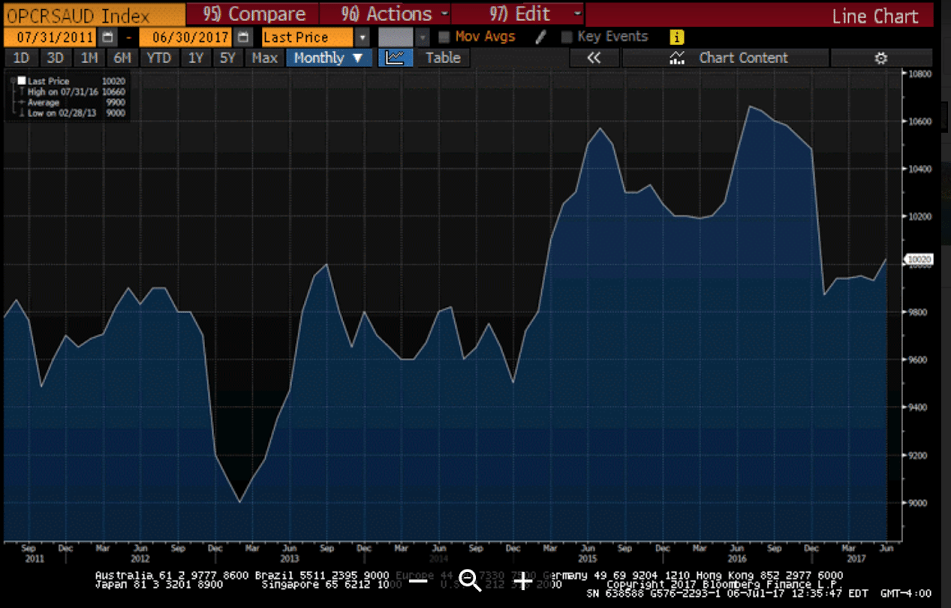
And the Saudis are back in control of crude prices after a very surprisingly small fall in world consumption given the size and scope of the international slowdown.

BoE’s Barker says rates could stay low for “quite some time”

MPC member Kate Barker told the Leicester Mercury newspaper that there
remained question marks over the sustainability of the recovery and that
interest rates “could stay low for quite some time”. Ms Barker echoed
Paul Tucker’s comments yesterday in saying that it would take some
months yet for the MPC to judge how robust the turnaround in activity
was: “The really important question is (whether) there’s a pick up in
the economy and if people can sustain that so it continues on to autumn.
That would be one of the most encouraging signs,” she said.


[top]

http://www.moslereconomics.com/wp-content/plugins/sociofluid/images/digg_48.png http://www.moslereconomics.com/wp-content/plugins/sociofluid/images/stumbleupon_48.png http://www.moslereconomics.com/wp-content/plugins/sociofluid/images/delicious_48.png http://www.moslereconomics.com/wp-content/plugins/sociofluid/images/newsvine_48.png http://www.moslereconomics.com/wp-content/plugins/sociofluid/images/technorati_48.png http://www.moslereconomics.com/wp-content/plugins/sociofluid/images/facebook_48.png http://www.moslereconomics.com/wp-content/plugins/sociofluid/images/twitter_48.png

Posted in Fed, Oil, UK | 5 Comments »

Commodities speculation

Posted by WARREN MOSLER on 26th May 2009


[Skip to the end]

I’ve also hear reports that pension funds have been adding to passive commodity strategies:

The green shoots will grow slowly

by David Robertson

May 25 (Business 24/7) — By the middle of this month, copper prices were 60 per cent up on the start of the year and platinum was up by a third. The rebound has been driven by a conviction that these metals were oversold and as construction demand (copper) and automotive demand (platinum) pick up, the price of the metals will return to more sensible levels. However, I bring bad news. Industrial demand is not returning nearly as fast as the London Metal Exchange or London Stock Exchange would have us believe – and that means we are still some way off from seeing a return to the sort of growth levels achieved prior to 2008.

Two things are currently distorting metal prices: Chinese stockpiling and speculation. The Chinese have taken advantage of the low price of metals to fill their warehouses and this has been mistaken for a dramatic ramp up in “real” industrial demand. I have no doubt that Chinese demand from factories and construction companies has increased recently but at nothing like a rate that would support a 60 per cent surge in copper prices.

Speculation has also played a significant role in boosting prices as investors have piled into commodities, partly because they have been fooled by Chinese demand and partly because a lot of people are already thinking about where to stash their cash in the event of rampant inflation next year.

Last week Investec, the South African bank, highlighted the impact speculation was having on market-traded metals by focusing on commodities that are not easily traded. For example, ferrochrome, which is used to make stainless steel, actually fell 13 per cent in price between the first and second quarter of this year and it is off 63 per cent from its high at the end of last year. Manganese contract prices are off 70 per cent and the steel makers are pushing for a 45 per cent cut in iron ore contract prices.

There is no “hot money” in these commodities so they give us a better guide to real industrial demand – and clearly there is little to get excited about yet. As a result, I expect to see a repeat of last year’s oil bubble: everyone will shortly wake up and realise that the shoots are not quite as green as had been hoped and prices will fall back by 20 to 30 per cent (again).


[top]

http://www.moslereconomics.com/wp-content/plugins/sociofluid/images/digg_48.png http://www.moslereconomics.com/wp-content/plugins/sociofluid/images/stumbleupon_48.png http://www.moslereconomics.com/wp-content/plugins/sociofluid/images/delicious_48.png http://www.moslereconomics.com/wp-content/plugins/sociofluid/images/newsvine_48.png http://www.moslereconomics.com/wp-content/plugins/sociofluid/images/technorati_48.png http://www.moslereconomics.com/wp-content/plugins/sociofluid/images/facebook_48.png http://www.moslereconomics.com/wp-content/plugins/sociofluid/images/twitter_48.png

Posted in Comodities, Oil | 2 Comments »

Saudi Arabian Oil Minister Naimi Says Oil to Reach $75 a Barrel

Posted by WARREN MOSLER on 25th May 2009


[Skip to the end]

No reason to expect it won’t happen if they want it to happen.

Saudi Arabian Oil Minister Naimi Says Oil to Reach $75 a Barrel

by Adam L. Freeman

May 23 (Bloomberg) — Saudi Arabian oil minister Ali al- Naimi said the price of oil will climb to $75 a barrel when demand picks up.

“We’ll get there eventually,” al-Naimi told reporters in Rome today where he will attend meetings with energy ministers from the Group of Eight industrialized nations. “The trick is keeping it between $70 and $80. It will be achieved as demand rises and the fundamentals are better than they are now.”

To reach that goal, Naimi said he will recommend OPEC members “stay the course” at their meeting in Vienna on May 28. Saudi Arabia is the biggest and most influential member of the Organization of Petroleum Exporting Countries, which produces about 40 percent of the world’s oil.

The group is likely to keep daily output quotas unchanged at 24.845 million barrels at the Vienna gathering, according to a Bloomberg survey.

Crude oil for July delivery rose 62 cents to settle at $61.67 a barrel at 2:45 p.m. on the New York Mercantile Exchange yesterday. The July contract increased 8.2 percent this past week. Oil is up 38 percent this year.

Naimi said oil should keep at about $75 a barrel “because that is what is desired for the world economy.”

Saudi Arabia produced less than its quota of 8 million barrels a day last month, according to a May 13 OPEC report. The Saudis produced 7.9 million barrels of OPEC’s 25.3 million- barrel daily output.

Naimi said last month that helping to keep oil prices at $50 a barrel was his country’s contribution to the world economy, which is fighting the worst recession in six decades. Since he made those comments in Tokyo on April 25, crude prices have climbed more than 20 percent to above $60 a barrel.

Exceed Ceiling

The 12 members of OPEC, which overshot their ceiling by 410,000 barrels last month, will update their policy on oil output at this month’s meeting. At the last summit on March 15, the group decided to leave quotas unchanged and adhere to its earlier commitment to restrict supply by a total of 4.2 million barrels a day from levels in September 2008.

Naimi said his country “very recently” started production at the Nuayyim oil field and it pumping 100,000 barrels a day. He added that even though Saudi Arabia has opened new production global markets don’t need the product.

“The problem is the market, that the demand is only in one place — Asia and that’s all.”

The group’s production rate rose during April, and most members are still producing more than their quota, a report from the OPEC Secretariat in Vienna showed earlier this month.

OPEC cut its 2009 forecast on May 13 and now estimates daily oil demand will fall by 1.57 million barrels, or 1.8 percent, to 84.03 million barrels of oil a day this year.


[top]

http://www.moslereconomics.com/wp-content/plugins/sociofluid/images/digg_48.png http://www.moslereconomics.com/wp-content/plugins/sociofluid/images/stumbleupon_48.png http://www.moslereconomics.com/wp-content/plugins/sociofluid/images/delicious_48.png http://www.moslereconomics.com/wp-content/plugins/sociofluid/images/newsvine_48.png http://www.moslereconomics.com/wp-content/plugins/sociofluid/images/technorati_48.png http://www.moslereconomics.com/wp-content/plugins/sociofluid/images/facebook_48.png http://www.moslereconomics.com/wp-content/plugins/sociofluid/images/twitter_48.png

Posted in Articles, Comodities, Oil | No Comments »

Gasoline demand

Posted by WARREN MOSLER on 20th April 2009


[Skip to the end]

Looks to me like it didn’t fall all that much with high prices or the recession and has begun to firm.


[top]

http://www.moslereconomics.com/wp-content/plugins/sociofluid/images/digg_48.png http://www.moslereconomics.com/wp-content/plugins/sociofluid/images/stumbleupon_48.png http://www.moslereconomics.com/wp-content/plugins/sociofluid/images/delicious_48.png http://www.moslereconomics.com/wp-content/plugins/sociofluid/images/newsvine_48.png http://www.moslereconomics.com/wp-content/plugins/sociofluid/images/technorati_48.png http://www.moslereconomics.com/wp-content/plugins/sociofluid/images/facebook_48.png http://www.moslereconomics.com/wp-content/plugins/sociofluid/images/twitter_48.png

Posted in Oil | No Comments »

Fuel demand falls

Posted by WARREN MOSLER on 16th April 2009


[Skip to the end]

Largest year over year drop in a while after hovering around flat year over year.

Might be why Saudis decided to cut prices recently.

I’m looking for consumption to increase as GDP stabilizes and then return to positive territory as global automatic stabilizers and proactive fiscal policies add net financial assets.

Crude Oil Rises After Unexpected Decline in U.S. Jobless Claims

by Mark Shenk

April 16 (Bloomberg) — Daily fuel demand averaged over the past four weeks was 18.7 million barrels, down 5.2 percent from a year earlier, according to the department.


[top]

http://www.moslereconomics.com/wp-content/plugins/sociofluid/images/digg_48.png http://www.moslereconomics.com/wp-content/plugins/sociofluid/images/stumbleupon_48.png http://www.moslereconomics.com/wp-content/plugins/sociofluid/images/delicious_48.png http://www.moslereconomics.com/wp-content/plugins/sociofluid/images/newsvine_48.png http://www.moslereconomics.com/wp-content/plugins/sociofluid/images/technorati_48.png http://www.moslereconomics.com/wp-content/plugins/sociofluid/images/facebook_48.png http://www.moslereconomics.com/wp-content/plugins/sociofluid/images/twitter_48.png

Posted in Articles, Oil | No Comments »

Saudi price cuts

Posted by WARREN MOSLER on 6th April 2009


[Skip to the end]

This should keep a lid on crude prices, as Saudis decide to set lower prices:

Saudi Arabia cuts oil prices for US, Europe for May

by Timothy Coulter and Diana ben-Aaron

Apr 6 (Tehran Times) — Saudi Aramco, the world’s largest state-owned oil company, cut its official selling prices for all grades for customers in the U.S., Northwestern and Mediterranean Europe.

Saudi Arabia slashed the U.S. price of its Arab Heavy Crude the most, cutting it by $5.50 a barrel to $4.85 below the price of the West Texas Intermediate grade made in the U.S., the state oil company said in a faxed statement today. That wiped out its April price premium of 65 cents more than WTI, the first time Saudi heavy oil traded for more than the U.S. benchmark in at least 10 years.

Saudi Arab Light Crude was reduced by $4.15 a barrel in the U.S. and will sell for $2.25 less than WTI, Saudi Aramco said. Its April price was $1.90 more than WTI.

In Northwest Europe, Saudi light crude will be priced at $4.05 less than the IPE benchmark, a cut of $1.60 from a $2.45 discount last month, according to the statement. Heavy crude from Saudi Arabia for Europe declined $2.10, putting it $5.80 below the IPE equivalent.

Mediterranean, Asian Prices

Oil for Mediterranean destinations also cheapened, with Saudi light oil declining 90 cents to $3.05 below the IPE benchmark, and heavy oil falling $1.75 to $5.55 below the Brent weighted average equivalent as listed on IPE.

Saudi Arabia increased Asian prices for light grades. Saudi Arab Light Crude will sell in Asia for 80 cents more than crude from Dubai and Oman, a reduction of 10 cents from the 90 cent- per-barrel premium last month. The Saudi heavy crude price was cut $1.20 to fall $1.85 below Dubai/Oman crude.


[top]

http://www.moslereconomics.com/wp-content/plugins/sociofluid/images/digg_48.png http://www.moslereconomics.com/wp-content/plugins/sociofluid/images/stumbleupon_48.png http://www.moslereconomics.com/wp-content/plugins/sociofluid/images/delicious_48.png http://www.moslereconomics.com/wp-content/plugins/sociofluid/images/newsvine_48.png http://www.moslereconomics.com/wp-content/plugins/sociofluid/images/technorati_48.png http://www.moslereconomics.com/wp-content/plugins/sociofluid/images/facebook_48.png http://www.moslereconomics.com/wp-content/plugins/sociofluid/images/twitter_48.png

Posted in Articles, Oil | No Comments »

Saudi crude production

Posted by WARREN MOSLER on 3rd April 2009


[Skip to the end]

Seems to be leveling off at levels that are comfortable for them as they set price and let quantity adjust.


[top]

http://www.moslereconomics.com/wp-content/plugins/sociofluid/images/digg_48.png http://www.moslereconomics.com/wp-content/plugins/sociofluid/images/stumbleupon_48.png http://www.moslereconomics.com/wp-content/plugins/sociofluid/images/delicious_48.png http://www.moslereconomics.com/wp-content/plugins/sociofluid/images/newsvine_48.png http://www.moslereconomics.com/wp-content/plugins/sociofluid/images/technorati_48.png http://www.moslereconomics.com/wp-content/plugins/sociofluid/images/facebook_48.png http://www.moslereconomics.com/wp-content/plugins/sociofluid/images/twitter_48.png

Posted in Articles, Oil | No Comments »

Review of the recession and how to end it

Posted by WARREN MOSLER on 30th March 2009


[Skip to the end]

  1. The problem is suboptimal output and employment which is evidence of a lack of aggregate demand.
     
  2. Less important what caused the drop in aggregate demand
    • The end of the subprime expansion in 2006 reduced the demand for housing
       
    • The wind down of the one time Q2 2008 fiscal adjustment (Q2 2008 GDP was up 2.8%)
       
    • The Mike Masters inventory liquidation that began in July 2008 added supply from inventories, reducing output and employment
       
    • A shift in the propensity to spend due to the pro cyclical nature of credit worthiness


  3. My proposals for restoring aggregate demand:
    • A full payroll tax holiday - This tax is taking $1 trillion per year from workers and businesses struggling to make ends meet $1,000 per capita in revenue sharing for the States (approx. $300 billion total).
       
    • Federal funding for a $8 per hour full time job for anyone willing and able to work that includes federal health care.
       
    • Caveat - Unless our demand for motor fuel is cut in half, restoring aggregate demand will also empower the Saudis to set ever higher prices for crude oil which will cause our real terms of trade and standard of living to deteriorate.
       
    • Political options for reducing imported fuel consumption:
       

      • Regressive - utilizing allocation by price (Carbon tax, fuel taxes)
         
      • Closer to neutral - mandating higher fuel economy requirements for new vehicles, offering incentives to trade up to more fuel efficient vehicles
         
      • Progressive - substantially reducing speed limits to discourage driving and advantage public transportation


  4. Redirect banking to serve public purpose
    • Ban banks from all secondary markets.
       
    • Allow bank lending only to serve public purpose.
       
    • Do not use the liability side of banking for market discipline.


  5. Analysis of current situation
    • Our leaders believe they must first ‘get credit flowing again’ to restore output and employment.
       
    • Unfortunately the reverse is the case; restoration of output and employment will restore the flow of credit.
       
    • Government is removing about $1 trillion per year in payroll taxes from employees and employers who can’t meet their mortgage payments and wondering what is causing the financial crisis.
       
    • All moves to date by the Treasury and Federal Reserve have only served to shift financial assets between the public and private sectors. Nothing has directly added to aggregate demand.
       
    • Therefore the economy has continued to deteriorate, with only the ‘automatic stabilizers’ slowly adding financial assets and income to the private sector, as the counter-cyclical deficit rises.
       
    • The rate of federal deficit spending (not counting TARP and other shifting of financial assets that does not directly alter demand, as above) now exceeds 5% of GDP and seems to have begun moving the economy sideways.
       
    • The new fiscal package starts taking effect in April. While modest in size, it isn’t ‘nothing’ and will further support GDP.
       
    • Employment will not grow until real output of goods and services exceeds productivity growth.
       
    • Fuel prices are already moving higher.


  6. Conclusion
    • Leadership that doesn’t understand how the monetary system works has needlessly prolonged the recession and delayed the recovery.
       
    • They have put a premium on ‘confidence’ as the President spends countless hours in front of the TV cameras, when in fact loss of ‘confidence’ means only that federal taxes can be lower for a given level of federal spending:

      lower confidence = less private sector spending = less aggregate demand = lower taxes or higher federal spending to sustain output and employment

    • The headline USD trillions they have directed towards the financial sector has accomplished little or nothing beyond burning up expensive political capital and credibility.
       
    • They are in this way over their heads, and it’s costing us dearly.


[top]

http://www.moslereconomics.com/wp-content/plugins/sociofluid/images/digg_48.png http://www.moslereconomics.com/wp-content/plugins/sociofluid/images/stumbleupon_48.png http://www.moslereconomics.com/wp-content/plugins/sociofluid/images/delicious_48.png http://www.moslereconomics.com/wp-content/plugins/sociofluid/images/newsvine_48.png http://www.moslereconomics.com/wp-content/plugins/sociofluid/images/technorati_48.png http://www.moslereconomics.com/wp-content/plugins/sociofluid/images/facebook_48.png http://www.moslereconomics.com/wp-content/plugins/sociofluid/images/twitter_48.png

Posted in Mosler 2012, Oil, Political, Proposal | 6 Comments »

US gasoline demand chart

Posted by WARREN MOSLER on 11th March 2009


[Skip to the end]

Year over year gasoline demand (in gallons) was down a bit this week still looks to be working its way higher since December.

Year over year changes are now very small, indicating little or no ‘demand destruction.’


[top]

http://www.moslereconomics.com/wp-content/plugins/sociofluid/images/digg_48.png http://www.moslereconomics.com/wp-content/plugins/sociofluid/images/stumbleupon_48.png http://www.moslereconomics.com/wp-content/plugins/sociofluid/images/delicious_48.png http://www.moslereconomics.com/wp-content/plugins/sociofluid/images/newsvine_48.png http://www.moslereconomics.com/wp-content/plugins/sociofluid/images/technorati_48.png http://www.moslereconomics.com/wp-content/plugins/sociofluid/images/facebook_48.png http://www.moslereconomics.com/wp-content/plugins/sociofluid/images/twitter_48.png

Posted in Articles, Oil | No Comments »

OPEC February Crude Output Down 770,000 Bbl/Day to 27.775 Million

Posted by WARREN MOSLER on 9th March 2009


[Skip to the end]

The Saudis are back to being swing producer as they set price and let output adjust.

World inventories are estimated to be falling by over 1.4 million barrels per day, as confirmed by the contango quickly fading to backwardation as we pass the ‘roll period’ for the passive funds.

With demand holding up better than markets anticipated and world non OPEC supply stagnant as well, I would expect demand for Saudi output to rise even as they keep prices firm.

I also expect the Fed to see this as a threat to growth rather than inflationary, and therefore continue to keep rates low.

OPEC February Crude Output down 770,000 Bdl/Day to 27.775 Mln

Mar 5 (Bloomberg) — Crude-oil production from the 12 OPEC members in February declined 770,000 barrels a day from January, the latest Bloomberg survey of producers, oil companies and industry analysts shows. Figures are in the thousands of barrels a day.

Opec Production
February 2009

Opec Country Feb Est. Jan Monthly Output Feb. 1 Change Est. vs. Target* Est. Target Est. Cap. (@)
Algeria 1,245 1,275 –30 1,203 42 1,450
Angola 1,670 1,740 -70 1,517 153 2,000
Ecuador 445 475 -30 434 11 500
Iran 3,690 3,780r -90 3,336 354 4,100
Iraq* 2,385 2,365 20 - - 2,500
Kuwait# 2,140 2,280 -140 2,222 -82 2,650
Libya 1,605 1,630r -25 1,469 136 1,800
Nigeria 1,765 1,810 -45 1,673 92 2,500
Qatar 695 725 -30 731 -36 900
Saudi Arabia# 7,860 8,025 -165 8,051 -191 10,800
U.A.E 2,210 2,290 -80 2,223 79 2,800
Venezuela 2,065 2,150 -85 1,986 79 2,500
Total OPEC-12 27,775 28,545r -770 34,500
Total OPEC-11* 25,390 26,180r -790 24,845 545 32,000

*Quotas effective Jan. 1, 2009. OPEC agreed at its Dec. 17 meeting in Algeria to cut its quota target by 2.463 million barrels a day from the previous level, to 24.845 million barrels daily from Jan. 1. The quota target excludes Iraq, which has no formal quota. Indonesia left OPEC at end-2008.

Totals rounded.

r = revised @ = Capacity attainable within 30 days and sustainable for 90 days. # Includes Neutral Zone production shared equally between Saudi Arabia & Kuwait.


[top]

http://www.moslereconomics.com/wp-content/plugins/sociofluid/images/digg_48.png http://www.moslereconomics.com/wp-content/plugins/sociofluid/images/stumbleupon_48.png http://www.moslereconomics.com/wp-content/plugins/sociofluid/images/delicious_48.png http://www.moslereconomics.com/wp-content/plugins/sociofluid/images/newsvine_48.png http://www.moslereconomics.com/wp-content/plugins/sociofluid/images/technorati_48.png http://www.moslereconomics.com/wp-content/plugins/sociofluid/images/facebook_48.png http://www.moslereconomics.com/wp-content/plugins/sociofluid/images/twitter_48.png

Posted in Articles, Oil | No Comments »

Crude oil inventories falling

Posted by WARREN MOSLER on 9th March 2009


[Skip to the end]

Higher crude prices means dollars are easier to get overseas and will tend to weaken the dollar.

And the talk is higher oil prices will give the Fed more reason to keep rates low as the higher prices tend to slow growth.

And don’t immediately impact core price measures.

Oil at $50 as OPEC Plans Cut, Keeps to Quota

by Grant Smith

Mar 9 (Bloomberg) — OPEC’s record production cuts are draining the glut in world oil markets, leading traders to bet that $50 crude is two months away.

Ever since oil began its 69 percent plunge from a record $147.27 a barrel in July, traders have been looking for a bottom. Now that the Organization of Petroleum Exporting Countries reduced supplies 13 percent since September, inventories are falling 1.4 million barrels a day, according to PVM Oil Associates Ltd., the world’s biggest broker of energy trades between banks. OPEC will limit exports again when the group meets March 15, according to a survey by Bloomberg News


[top]

http://www.moslereconomics.com/wp-content/plugins/sociofluid/images/digg_48.png http://www.moslereconomics.com/wp-content/plugins/sociofluid/images/stumbleupon_48.png http://www.moslereconomics.com/wp-content/plugins/sociofluid/images/delicious_48.png http://www.moslereconomics.com/wp-content/plugins/sociofluid/images/newsvine_48.png http://www.moslereconomics.com/wp-content/plugins/sociofluid/images/technorati_48.png http://www.moslereconomics.com/wp-content/plugins/sociofluid/images/facebook_48.png http://www.moslereconomics.com/wp-content/plugins/sociofluid/images/twitter_48.png

Posted in Oil | No Comments »

Saudi prices

Posted by WARREN MOSLER on 5th March 2009


[Skip to the end]

Saudi price hikes should continue until they get to their price target, whatever that might be.

Saudi’s formula changes which effectively raise prices. Aramco’s formula changes for April sales basically amounted to a price hike. Sales to US refiners are set against WTI prices. European refiners get priced off of Brent and Asia buyers are priced off a spread to Dubai and Oman. Essentially Saudi Arabia made it more expensive on a relative basis with the goal of taking crude off the market to counter the effect of weak demand.


[top]

http://www.moslereconomics.com/wp-content/plugins/sociofluid/images/digg_48.png http://www.moslereconomics.com/wp-content/plugins/sociofluid/images/stumbleupon_48.png http://www.moslereconomics.com/wp-content/plugins/sociofluid/images/delicious_48.png http://www.moslereconomics.com/wp-content/plugins/sociofluid/images/newsvine_48.png http://www.moslereconomics.com/wp-content/plugins/sociofluid/images/technorati_48.png http://www.moslereconomics.com/wp-content/plugins/sociofluid/images/facebook_48.png http://www.moslereconomics.com/wp-content/plugins/sociofluid/images/twitter_48.png

Posted in Articles, Oil | No Comments »

China to bolster oil reserves

Posted by WARREN MOSLER on 2nd March 2009


[Skip to the end]

It’s not a lot but seems private inventories are low and were probably liquidated in the last 6 months.

China to bolster oil reserves

by Sun Xiaohua

Mar 2 (China Daily) — China is accelerating the build-up of its oil reserves to avoid the economic dislocations the country suffered in 2008 from fluctuations in the world oil price.

China’s National Energy Administration (NEA) recently released a plan to build nine large refining bases in coastal areas over the next three years, sources with the China Petroleum and Chemical Industry Association said last week.

The plan involves building three 30-million-ton refinery bases in three cities (Shanghai, Ningbo and Nanjing) in China’s economically dynamic Yangtze Delta and six 20-million-ton bases in other coastal areas from Tianjin in the north to Guangzhou in the south. It will also facilitate major joint-venture refinery projects between Chinese companies and partners from oil-producing countries such as Venezuela,Qatar and Russia.

The refinery scheme is part of China’s plan to bolster its oil inventories. The NEA announced at a national energy conference in early February that China will, in addition to the current four strategic petroleum reserve (SPR) bases, build eight new ones by 2011. The program will increase China’s strategic crude reserve capacity to 44.6 million cu m, or 281 million barrels.

The country will also increase its refined oil reserve to 10 million tons by 2011, a source familiar with the stockpile plan told China Daily in February.

“China’s attentiveness to its oil reserve capacity has grown in tandem with its rising dependence on imported oil,” said Pan Jiahua, an expert with the Chinese petroleum society.

China, the world’s second largest oil consumer, relies on imports for about half of its oil needs. It imported 178.9 million tons of crude oil in 2008, up 9.6 percent from the previous year, according to the National Development and Reform Commission.

But China cannot simply take advantage of attractive prices and store as much oil as it wants because its current reserve capacity is not commensurate with its energy appetite.

Customs statistics shows China’s crude imports in January even fell 7.99 percent year-on-year. A slowing economy bears most of the blame but analysts said the country’s limited capacity also played a role.

Zhao Youshan, head of the petroleum distribution committee of the China General Chamber of Commerce, an industry group, recently submitted a proposal to oil-related government agencies, calling for using tanks controlled by private companies to store more cheap oil.

Zhou said in his proposal that China’s more than 600 private oil companies have 230 million tons worth of storage tanks, almost ten times the capacity of the eight new SPR tanks combined.


China has massive private oil storage facilities, built up by oil companies since China opened its oil markets to private operators in the mid-1990s. But State companies, mainly China National Petroleum Corp (CNPC) and China PetroChemical Corp (Sinopec), basically control oil-importing licenses and hundreds of private oil distributors and refiners are currently sitting on empty tanks.

Zhou said in his report that the industry slump last year has left many private oil companies broke and that some of the survivors are struggling with the high maintenance cost of empty tanks.


[top]

http://www.moslereconomics.com/wp-content/plugins/sociofluid/images/digg_48.png http://www.moslereconomics.com/wp-content/plugins/sociofluid/images/stumbleupon_48.png http://www.moslereconomics.com/wp-content/plugins/sociofluid/images/delicious_48.png http://www.moslereconomics.com/wp-content/plugins/sociofluid/images/newsvine_48.png http://www.moslereconomics.com/wp-content/plugins/sociofluid/images/technorati_48.png http://www.moslereconomics.com/wp-content/plugins/sociofluid/images/facebook_48.png http://www.moslereconomics.com/wp-content/plugins/sociofluid/images/twitter_48.png

Posted in Articles, China, Oil | 1 Comment »

Crude oil prices

Posted by WARREN MOSLER on 17th February 2009


[Skip to the end]

I believe the Saudi guy:

Qatar energy official: OPEC willing to cut output

by Adam Schreck

Feb 15 (AP) — A senior Qatari energy official said Sunday that OPEC is watching the oil market closely and stands ready to cut output further when it meets next month.

Mohammed Saleh al-Sada, Qatar’s minister of state for energy and industry affairs, told reporters on the sidelines of a conference in Doha that the Organization of Petroleum Exporting Countries “will respond appropriately” to the rapid drop in oil prices.

“If there is a need, actually, to go down, they will not be hesitant to reduce it further,” he said, without saying by how much.

The oil-producing group, he said, was facing difficulties in setting output because of the “unusual situation” of extreme fluctuation in prices. “The volatility is huge,” said al-Sada.

Al-Sada said a “reasonable price” for oil would be $70 a barrel -well above the $37.51 benchmark light, sweet crude settled Friday.

In Kuwait, however, a senior oil official said crude prices are unlikely to rise above $40 per barrel, even if OPEC decides to cut as much as 2 million barrels per day at its meeting next month.

Moussa Marafi, a member of the Supreme Petroleum Council, Kuwait’s highest oil policy-making body, told Annahar newspaper in comments published Sunday that oil prices are being pressured by surging U.S. crude inventories and a lack of compliance to quotas by some OPEC members.

The comments come a day after the oil minister of Venezuela, a traditional price hawk, said it would support new production cuts. Oil Minister Rafael Ramirez said the group is worried because commercial inventories are still «very high.

OPEC members have agreed to slash production by 4.2 million barrels from September levels in an effort to put a floor beneath prices that have tumbled by nearly three-quarters from the record highs they hit over the summer.

The group, which produces about 40 percent of the world’s oil, said last week it has completed about 80 percent of those previously agreed cutbacks.


[top]

http://www.moslereconomics.com/wp-content/plugins/sociofluid/images/digg_48.png http://www.moslereconomics.com/wp-content/plugins/sociofluid/images/stumbleupon_48.png http://www.moslereconomics.com/wp-content/plugins/sociofluid/images/delicious_48.png http://www.moslereconomics.com/wp-content/plugins/sociofluid/images/newsvine_48.png http://www.moslereconomics.com/wp-content/plugins/sociofluid/images/technorati_48.png http://www.moslereconomics.com/wp-content/plugins/sociofluid/images/facebook_48.png http://www.moslereconomics.com/wp-content/plugins/sociofluid/images/twitter_48.png

Posted in Articles, Oil | 8 Comments »

Commodities bottoming as the great Mike Masters inventory liquidation runs its course

Posted by WARREN MOSLER on 17th February 2009


[Skip to the end]

It all came to a near halt with the world wide inventory liquidation. Now flows are resuming but will be at lower levels than before, reflecting lower demand.

Prices should recover over time to something above replacement costs.

Look for deteriorating real terms of trade for the US as the modest fiscal adjustment adds to demand, and import prices grow faster than export prices, led by Saudi crude pricing.

Shipping Index Surge Signals Commodity Currency Gains

by Ye Xie and Candice Zachariahs

Feb 17 (Bloomberg) — Shipping costs have more than doubled this year, so it may be time to buy kroner, Aussies and loonies.

The 147 percent jump in ocean-transport prices is evidence that China’s $580 billion stimulus plan will lift raw materials, said Ihab Salib, who oversees $3 billion at Federated Investments Inc. in Pittsburgh. That would benefit countries exporting them, so Salib is “actively trading” Norway’s krone and Australian and Canadian dollars, nicknamed Aussies and loonies.

Salib and other currency traders have started using the Baltic Dry Index’s global gauge of raw-material shipping costs to help make such decisions. The index and the value of a basket of those three resource-rich countries’ currencies are increasingly moving in tandem — 96 percent of the time in the past year, up from 84 percent in the past decade, data compiled by Bloomberg show.

“Historically, the Baltic Dry Index is a good leading indicator for commodity prices,” said Salib, who declined to detail his investments. “Commodities are very depressed right now, and they offer good long-term value. Once they come back, these currencies should do well.”

The shipping gauge is a sign that China’s stimulus spending on housing, highways, airports and power grids will have impact beyond its borders. By Feb. 28, it will have spent 25 percent of its stimulus budget, Deutsche Bank AG said Jan. 20, predicting the country’s economy will grow at a 12 percent annual rate between the fourth and first quarter, after shrinking 2.3 percent between the third and fourth.

Oil Rebound

China is the world’s biggest consumer of copper and iron ore and has helped each rally this year by about 10 percent, benefiting Australia and Canada, which account for 10 percent of world production of the two metals. Oil,Norway’s top export, will average $66 a barrel in the fourth quarter, up from an average of $40.62 since Jan. 1, according to the median forecast of 34 analysts surveyed by Bloomberg. China is the world’s second-biggest energy user.


[top]

http://www.moslereconomics.com/wp-content/plugins/sociofluid/images/digg_48.png http://www.moslereconomics.com/wp-content/plugins/sociofluid/images/stumbleupon_48.png http://www.moslereconomics.com/wp-content/plugins/sociofluid/images/delicious_48.png http://www.moslereconomics.com/wp-content/plugins/sociofluid/images/newsvine_48.png http://www.moslereconomics.com/wp-content/plugins/sociofluid/images/technorati_48.png http://www.moslereconomics.com/wp-content/plugins/sociofluid/images/facebook_48.png http://www.moslereconomics.com/wp-content/plugins/sociofluid/images/twitter_48.png

Posted in Articles, Comodities, Oil | 2 Comments »

RBOB (gasoline) vs Crude Oil

Posted by WARREN MOSLER on 12th February 2009


[Skip to the end]

A lot of this is the front month getting hurt technically by the futures funds caught in the nearby months with massive rolls to do each month.


[top]

http://www.moslereconomics.com/wp-content/plugins/sociofluid/images/digg_48.png http://www.moslereconomics.com/wp-content/plugins/sociofluid/images/stumbleupon_48.png http://www.moslereconomics.com/wp-content/plugins/sociofluid/images/delicious_48.png http://www.moslereconomics.com/wp-content/plugins/sociofluid/images/newsvine_48.png http://www.moslereconomics.com/wp-content/plugins/sociofluid/images/technorati_48.png http://www.moslereconomics.com/wp-content/plugins/sociofluid/images/facebook_48.png http://www.moslereconomics.com/wp-content/plugins/sociofluid/images/twitter_48.png

Posted in Oil | 2 Comments »

Re: Saudi blend leading the way?

Posted by WARREN MOSLER on 12th February 2009


[Skip to the end]

Thanks, who would have thought the Saudi blend would lead the way…

>   
>   On Thu, Feb 12, 2009 at 12:09 PM, David wrote:
>   
>   U.S. CASH CRUDE MARS SOUR RISES
>   $1.00 TO RECORD $8.00 ABOVE WTI – TRADER
>   
>   I believe this is the Saudi sour equivalent here in
>   US.
>   


[top]

http://www.moslereconomics.com/wp-content/plugins/sociofluid/images/digg_48.png http://www.moslereconomics.com/wp-content/plugins/sociofluid/images/stumbleupon_48.png http://www.moslereconomics.com/wp-content/plugins/sociofluid/images/delicious_48.png http://www.moslereconomics.com/wp-content/plugins/sociofluid/images/newsvine_48.png http://www.moslereconomics.com/wp-content/plugins/sociofluid/images/technorati_48.png http://www.moslereconomics.com/wp-content/plugins/sociofluid/images/facebook_48.png http://www.moslereconomics.com/wp-content/plugins/sociofluid/images/twitter_48.png

Posted in Email, Oil | No Comments »

OPEC January Crude Output Down 1,050,000 Bbl/Day to 28.565 Mln

Posted by WARREN MOSLER on 6th February 2009


[Skip to the end]

OPEC January Crude Output Down 1,050,000 Bdl/Day to 28.565M

Feb 3 (Bloomberg) — Crude-oil production from the 12 OPEC members in January declined 1,050,000 barrels a day from December, the latest Bloomberg survey of producers, oil companies and industry analysts shows. Figures are in the thousands of barrels a day.

Opec Production
January 2009

Opec Country Jan Est. Dec. Monthly Output Jan. 1 Change Est. vs. Target* Est. Target Est. Cap. (@)
Algeria 1,275 1,330 -55 1,202 72 1,450
Angola 1,740 1,820 -80 1,517 223 2,000
Ecuador 475 500 -25 434 41 500
Indonesia* - - - - - -
Iran 3,800 3,850 -50 3,336 464 4,100
Iraq* 2,365 2,345 20 - - 2,500
Kuwait# 2,280 2,350r -70 2,222 58 2,650
Libya 1,630 1,660r -30 1,469 161 1,800
Nigeria 1,810 1,900 -90 1,673 137 2,500
Qatar 725 790 -65 731 -6 900
Saudi Arabia# 8,025 8,400 -375 8,051 -26 10,800
U.A.E 2,290 2,350 -60 2,223 67 2,800
Venezuela 2,150 2,320 -170 1,986 164 2,500
Total OPEC-12 28,565 29,615r -1050 34,500
Total OPEC-11* 26,200 27,270r -1070 24,845 1,355 32,000

*Quotas effective Jan. 1, 2009. OPEC agreed at its Dec. 17 meeting in Algeria to cut its quota target by 2.463 million barrels a day from the previous level, to 24.845 million barrels daily from Jan. 1. The quota target excludes Iraq, which has no formal quota, and Indonesia which left OPEC at end-2008.

Totals rounded.
r = revised @ = Capacity attainable within 30 days and sustainable for 90 days.
# Includes Neutral Zone production shared equally between Saudi Arabia & Kuwait.


[top

http://www.moslereconomics.com/wp-content/plugins/sociofluid/images/digg_48.png http://www.moslereconomics.com/wp-content/plugins/sociofluid/images/stumbleupon_48.png http://www.moslereconomics.com/wp-content/plugins/sociofluid/images/delicious_48.png http://www.moslereconomics.com/wp-content/plugins/sociofluid/images/newsvine_48.png http://www.moslereconomics.com/wp-content/plugins/sociofluid/images/technorati_48.png http://www.moslereconomics.com/wp-content/plugins/sociofluid/images/facebook_48.png http://www.moslereconomics.com/wp-content/plugins/sociofluid/images/twitter_48.png

Posted in Articles, Oil | 2 Comments »

Saudi production falls

Posted by WARREN MOSLER on 6th February 2009


[Skip to the end]

Saudis will let production fall to levels consistent with their price target.

That’s what swing producers do.

Unless demand drops so far they can’t let output fall further.

So far independent world demand forecasts don’t show that happening.


[top]

http://www.moslereconomics.com/wp-content/plugins/sociofluid/images/digg_48.png http://www.moslereconomics.com/wp-content/plugins/sociofluid/images/stumbleupon_48.png http://www.moslereconomics.com/wp-content/plugins/sociofluid/images/delicious_48.png http://www.moslereconomics.com/wp-content/plugins/sociofluid/images/newsvine_48.png http://www.moslereconomics.com/wp-content/plugins/sociofluid/images/technorati_48.png http://www.moslereconomics.com/wp-content/plugins/sociofluid/images/facebook_48.png http://www.moslereconomics.com/wp-content/plugins/sociofluid/images/twitter_48.png

Posted in Oil | No Comments »

China- crude consumption

Posted by WARREN MOSLER on 29th January 2009


[Skip to the end]

China’s policy stimulus to spur car sales in year of ox

Jan 28 (Xinhua) — Due to bigger-than expected cut in fuel prices at the end of 2008 and halved car purchase taxes in effect just before the Lunar New Year, China’s auto industry can expect the year of the ox to be a bullish one for sales growth, which was in a ten-year low in 2008.

“With the recent policy changes on fuel price, car purchase tax and fees, I can save more than 8,000 yuan ($1,170) to have a car,” said Wang Yong, who just bought a new POLO sedan produced by Shanghai Volkswagen Co Ltd.

Like many other auto makers, the company offered discounts of 5,000 yuan for POLO and LAVIDA models during China’s Lunar New Year to woo the young working class. The prices for the cars are a little higher than 100,000 yuan, which is generally considered affordable for wage earners in China.

More than 3.1 million small-sized cars were sold in China last year, accounting for 61.54 percent of the total 9.35 million units of vehicles sold in the period, when the year-on-year growth slowed to 6.7 percent, the lowest in ten years, according to statistics from the China Auto Industry Association.

Ye Sheng, an auto industry analyst said that China’s auto market is far from saturated — especially for private vehicles.

He expected the government’s stimulus to boost the market sentiment this year.

Ye said despite that the global financial pinch eroded the demand for business cars and drove up the cost for auto production, China’s auto demand would continue to grow with the increase of personal wealth.


[top]

http://www.moslereconomics.com/wp-content/plugins/sociofluid/images/digg_48.png http://www.moslereconomics.com/wp-content/plugins/sociofluid/images/stumbleupon_48.png http://www.moslereconomics.com/wp-content/plugins/sociofluid/images/delicious_48.png http://www.moslereconomics.com/wp-content/plugins/sociofluid/images/newsvine_48.png http://www.moslereconomics.com/wp-content/plugins/sociofluid/images/technorati_48.png http://www.moslereconomics.com/wp-content/plugins/sociofluid/images/facebook_48.png http://www.moslereconomics.com/wp-content/plugins/sociofluid/images/twitter_48.png

Posted in Articles, China, Oil | No Comments »