The Center of the Universe

Saint Croix, United States Virgin Islands

Archive for the 'Energy' Category


TimesOnline: Latest on BoE rate setting

Posted by WARREN MOSLER on 7th August 2008

The mainstream view remains the cost of a near term recession in order to bring prices under control now is far less than the cost of a recession later if you support growth now and let prices continue higher.

Bank of England holds interest rate at 5%

by Gary Duncan, Grainne Gilmore

The Bank of England rebuffed mounting concerns over the rapidly weakening economy today and held interest rates at 5 per cent as it pursued its drive to quell soaring inflation.

The tough verdict from the Bank’s rate-setting Monetary Policy Committee (MPC) brushed aside pleas from business leaders and trade unions for a cut in base rates to shore up Britain’s growth, amid growing fears that the country is on the brink of recession.

The Bank’s decision came after headline consumer price inflation leapt to a 10-year high of 3.8 per cent in June, well above the Bank’s 2 per cent target, and amid expectations that it could hit 5 per cent over the summer, following swingeing increases in household gas and electricity bills imposed by utility companies.

The MPC had been widely expected to spurn pressure for a rate cut today in a bid to make clear its determination to bring inflation back to the target set by the Chancellor. The committee will almost certainly have discussed raising rates this morning, as it did last month, when Professor Tim Besley, voted for an immediate increase. He is expected to have done so again today, and may have been joined by other hawkish MPC members.

The Bank will set out its thinking more clearly next week when it publishes its latest forecasts for the economy in its quarterly Inflation Report. That is expected to emphasise the dilemma that the MPC confronts, with inflation set to soar far above target in the next few months, even as the economy slides towards a severe downturn.

The quandary facing the Bank was underlined yesterday as the International Monetary Fund sharply cut its forecasts for Britain’s growth this year and next, while issuing a warning that it saw “little scope” for interest rates to fall, although it also saw no need for an immediate rate rise.

Today’s no-change verdict by the MPC came despite bleak economic news in recent days, which have produced danger signs of recession.

Concern that Britain’s growth had ground to a virtual halt last month, and could even be in the grip of recession, were inflamed this week after bleak figures revealed growing frailty in the most critical parts of the economy.

These included shrinking activity in the services sector, the economy’s engine room that account for three quarters of the UK’s output, as well as in manufacturing.

The services sector, spanning businesses from cafes and leisure centres to accountancy and law firms, shrank for a third month in succession last month, according to the latest purchasing managers’ survey, regarded by the Bank as a key gauge of economic conditions.

Although services activity edged up from a seven-year low that was plumbed in June, the survey pointed to an even sharper slowdown ahead, with levels of outstanding business for the sector’s companies falling for a tenth month in a row, and inflows of new business dropping to a record low.

At the same time, it emerged that manufacturing is suffering its first sustained run of decline since 2001, after its output fell in June for a fourth month in a row, dropping by 0.5 per cent.

The figures were among the latest data confirming the dire plight of the economy, and came after official confirmation that the pace of Britain’s overall growth slowed to just 0.2 per cent in the second quarter, its weakest rate of expansion for three years.

The falling housing market remains a key source of economic anxiety, with the Nationwide Building Society reporting that house prices tumbled by a further 1.7 per cent last month, leaving them down 8.1 per cent on last year - their sharpest annual pace of decline since 1991.

The high street is also being badly hit by the downturn, with official figures showing that retail sales plunged by 3.9 per cent in June - their biggest monthly drop for 22 years.

Yesterday, the International Monetary Fund added to the mood of pessimism as it cut its forecast for Britain’s growth this year and next to only 1.4 per cent, and 1.1 per cent, respectively. The prediction of the UK’s worst performance since the end of the last recession raised the spectre of two years of economic misery.

In May, Mervyn King, Governor of the Bank, was forced to write an explanatory letter to the Chancellor, required by law, explaining why inflation had risen more than 1 point above its 2 per cent target, after it climbed to its then-high of 3.3 per cent. Mr King has admitted that he expects to write more such letters this year.

The Bank’s inflation headache has been further aggravated by signs of further severe price pressures in the pipeline to the consumer, Manufacturers’ costs rose at a record 30 per cent annual rate in June, and prices for goods leaving factories rose by a record 10 per cent. Inflation is being stoked by a sharp slide in the pound, by about 12 per cent over the past year, which lifts Britain’s bills for imported products.

However, there has been some let up in international food and energy costs, with oil prices tumbling by 13 per cent in a month, and prices for food products are also on the slide.

Posted in Articles, Energy, Inflation, Interest Rates, UK | No Comments »

Re: Resource allocation

Posted by WARREN MOSLER on 4th August 2008


[Skip to the end]

>   
>   On 8/3/08, Craig wrote:
>   
>   Ok. And the irony is as prices fall, demand increases again.
>   Until consuming governments get their head around that fact
>   and put some kind of floor under crude prices to incent
>   substitution (which may be beyond their thinking and/or impossible
>   politically), it seems like crude prices are gonna play rope-a-dope
>   with consumers.
>   
>   
>   Craig
>   
>   

Crude will be rationed as is everything else (scarcity, etc.).

The question is how. Ration by price or by other things?

Rationing by price is the most pervasive and means the wealthy (by definition) outbid the less wealthy for the available supply.

Make you wonder why the Democrats support higher prices, as that means they support their supporters going without while the wealthy drive any size SUV they want. Much like wondering why Obama supports Bernanke after Bernanke explained to Congress how he’s keeping inflation down by keeping a lid on inflation expectations after explaining the main component of inflation expectations is workers demanding higher wages, meaning Obama, Kennedy, and the rest of the left is praising Bernanke for doing a good job of suppressing wages.

Non-price rationing is less common but not unfamiliar, such as mandating cars get an average of 27 mpg, minimum efficiency standards for refrigerators, windows, etc. This takes an element of rationing by price away and results in the wealthy consuming less and leaving some for the less wealthy to consume a bit.

So seems to me the logical path for the Democrats would be something like my 30 mph speed limit for private transportation, which is ‘progressive’ and also drives the move towards public transportation with non price incentives as previously outlined. But there hasn’t even been any discussion of a progressive policy response. All seem highly regressive to me.

So I expect the world’s new and growing class of wealthy will continue to outbid our least wealthy for fuel and other resources.

Also, there may be limits to how high we want world consumption/burning of fuels for all the various ‘green’ reasons.

That would mean drilling and other production increases are out, as would be increased use of coal via the electric grid for electric cars.

And, again, it would be the world’s wealthy outbidding the less wealthy for consumption of the allowable annual fuel burn, as somehow allocation by price continues to rule.

Most paths keep coming down to the continuing combination of weakness and higher prices.

Warren

[top][end]


(comments from my brother, Seth, who was cc’d)

>   
>   I think democrats have lots of business and profits waiting
>   in govt subsidies for wind and solar. If oil prices fall that goes
>   away for now and they can’t produce on the subsidies for
>   them-cynical view but probably true
>   
>   There are also a lot of wealthy democrats and they want their
>   votes. Poor people all vote for democrats anyway-even with
>   declining lifestyles they are not going to McCain. So I think
>   Obama is pandering to the wealthy-it might be who he is-no
>   one really knows.
>   
>   With all of their green talk I have not seen any of them reduce
>   air travel, suv caravans or turn off the a/c in the capital. Just a
>   way to get votes and sound concerned. I saw a tv program
>   about how the chinese olympic swimming building is a green
>   sustainable building. It is 7 acres, pools, 25,000 people.
>   they finally said it uses about 25% less energy than a comparable
>   building would have. That is not green or sustainable, especially
>   since the building was not needed in the first place. I think “green”
>   is about making money, not the environment.
>   
>   
>   Seth
>   

I just can’t allow myself to be that cynical like you new yorkers!

:)

Warren

>   
>   
>   I think I am cynical usually, but this green thing drives me nuts
>   it started 30 years ago but is now all about money
>   when I see some lights turned off in Times Square (even in the
>   daytime) or the 5 huge spot lights on the CBS building lighting up
>   Katie Couric’s 50′ x 30′ poster which are on 24 hours a day turned
>   off, then I will believe it is about resources and not money.
>   there is a long way to go.
>   they advertise expensive green buildings here-I am not kidding-the
>   big thing is thermostats with timers on them and bamboo floors-didn’t
>   we have those 30 years ago??
>   
>   they talked about the oscar ceremony being green this year-the
>   celebrities were all giddy about it-what they did was use red
>   carpet made of recycled fibers????? what is that?
>   absolutely nothing-
>   anyway, time to calm down. too much excitement here
>   seth -
>   
>   

[top]

Posted in Email, Energy, McCain, Obama, Oil, Political, Proposal | No Comments »

Reuters: Food price supports

Posted by WARREN MOSLER on 14th July 2008


[Skip to the end]

more inflation.

Prices are up due to short supplies due to biofuels and weather.

And the political response is handing out funds to those in need, even though that doesn’t create more to eat.

As previously discussed, governments have no choice but to step on the inflation pedal.

Whether it be for food support payments or financial sector support.

That’s how ‘democracy’ works.

(And democracy is way better than the second choice!)

World Bank’s Zoellick: Food prices high until 2012

by Alexandra Hudson

World Bank President Robert Zoellick said on Saturday he expected food prices to remain above 2004 levels until at least 2012 and energy prices would also remain high and volatile.

He repeated that with food and fuel prices in a “danger zone” there was a need for $10 billion to provide food and cash handouts for the world’s poorest.

Soaring oil and food prices have fueled inflation across the globe at the same time as economies slow, posing a sharp dilemma for lawmakers.


[top]

Posted in Articles, Energy, Inflation | No Comments »

AFP: Burning up more food for fuel

Posted by WARREN MOSLER on 12th July 2008


[Skip to the end]

The monetary system will burn up the world’s food supply for fuel until the marginal individual about to starve to death has enough political influence to stop the process.

I’m pretty sure that’s not the millionth one to die of starvation. And probably not the ten millionth.

As more and more acreage goes to biofuels, expect the real price of food to continue to rise.

Lula and Indonesian president pledge biofuel cooperation

by Zulhefi

(AFP) Brazilian President Luiz Inacio Lula da Silva and his Indonesian counterpart pledged cooperation on biofuels during talks here Saturday in a bid to take advantage of surging oil prices.

Lula and President Susilo Bambang Yudhoyono signed off on an agreement to share knowledge on biofuel technology after meeting at Jakarta’s presidential palace.

The Brazilian leader called spiralling global commodity prices a “great opportunity” for developing countries such as Indonesia and Brazil, both of which are major producers of biofuel.

“The developing countries that have the characteristics that Indonesia and Brazil have should not analyse this crisis as only a problem. We have to see this moment as a great opportunity,” Lula said.

“We have land, we have sunlight, we have water resources, we have technology and, thanks to God, the poor of the world have started to eat more, three meals a day, so they will demand more food production.”

The two leaders signed memoranda of understanding that would see the countries exchange experts and students to share knowledge on biofuels. Yudhoyono will also make an official visit to Brazil in November.

“In the energy sector, both countries are cooperating in the field of alternative energy. Brazil has succeeded in developing bio-ethanol and Indonesia can learn from Brazil to develop bio-ethanol,” Yudhoyono said.


[top]

Posted in Articles, Energy, Uncategorized | No Comments »

US Energy Consumption as % of GDP

Posted by WARREN MOSLER on 6th July 2008

US Energy Consumption as Percent of GDP

Interesting how the price hikes get us back to the 1970s ratio. One of the arguments that it was different this time around was that crude is a lower percentage of GDP than it was then.

The pass-throughs to the rest of the price structure are just getting started, and I expect them to persist well past the peak in crude prices.

Posted in Energy, Oil, USA | No Comments »

2008-06-23 Valance Weekly Economic Graph Packet

Posted by WARREN MOSLER on 23rd June 2008


[Skip to the end]

Real GDP

Can you find the recession? Year over year will be reasonable until last year’s large Q3 number drops out without similar sized q3 this year.


Capacity Utilization, ISM Manufacturing

Down but not out as GDP muddles through.


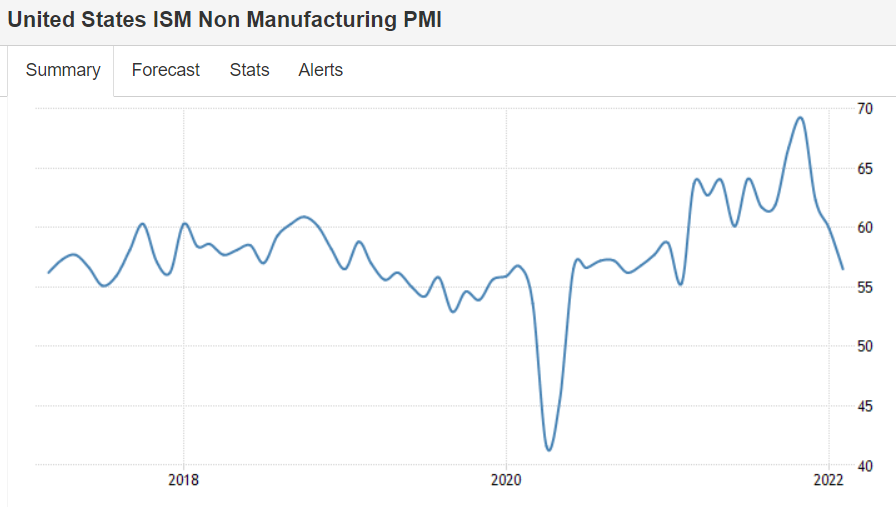
Philly Fed Index, Chicago PMI, ISM Non-Manufacturing, Empire Manufacturing Index

Limping along, but off the lows
The survey numbers seem to be depressed by inflation.


Retail Sales, Retail Sales Ex Autos, Total Vehicle Sales, Redbook Retail Sales Growth


Personal Spending, Personal Income

Apart from cars and trucks, retail muddling through, and getting some support from the fiscal package.


Non-farm Payrolls, Average Hourly Earnings, Average Weekly Hours, Unemployment Rate

Certainly on the soft side, but still positive year over year, earnings still increasing, and unemployment still relatively low (the last print was distorted a couple of tenths or so by technicals).


Total Hours Worked, Labor Participation Rate, Duration of Unemployment, Household Job Growth


Help Wanted Index, Chicago Unemployment, ISM Manufacturing Employment, ISM Non-Manufacturing Employment


Philly Fed Employment, Challenger Layoffs

Most of the labor indicators are on the weak side, but not in a state of collapse. And GDP is picking up some from the fiscal package which should stabilize employment.


NAHB Housing Index, NAHB Future Sales Index


Housing Starts, Building Permits, Housing Affordability, Pending Home Sales

Leveling off to improving a touch.
Housing is still way down and could bounce 35% at any time.
And still be at relatively low levels.


MBA Mortgage Applications

Mortgage apps are down but they are still at levels previously associated with 1.5 million starts vs today’s approx 1 million starts (annual rate).


Fiscal Balance, Govt Public Debt, Govt Spending, Govt Revenue

It’s an election year, and here comes the Govt. spending which is already elevating GDP.


CPI, Core CPI, PCE Price Index, Core PCE


PPI, Core PPI, Import Prices, Import Prices Ex Petro


Export Prices, U of Michigan Inflation Expectations, CRB Index, Saudi Oil Production

The ‘inflation’ is only going to work its way higher as it pours through the import and export channels.
And with Saudi production completely demand driven, there’s no sign of a fall off of world demand for crude at current prices.
Yes, the world’s growing numbers of newly rich are outbidding America’s lower income consumers for gasoline, as US demand falls off and rest of world demand increases.


Empire Prices Paid, Empire Prices Received, Philly Fed Prices Paid, Philly Prices Received

All the price surveys are pretty much the same as ‘inflation’ pours in.


ABC Consumer Confidence, ABC Econ Component, ABC Finance Component, ABC Buying Component

And all the surveys look pretty much the same as ‘inflation’ eats into confidence


10Y Tsy Yield

And with all the weakness rates have generally moved higher as it seems inflation is doing more harm than ultra low interest rates are helping, perhaps causing the Fed to reverse course.


10Y Tips

The TIPS market has been discounting higher ‘real’ rates from the Fed.


Dow Index

Even as stocks look to test the lows

[top]

Posted in Employment, Energy, Fed, GDP, Housing, Inflation, Oil | 2 Comments »

Competing for fuel

Posted by WARREN MOSLER on 18th June 2008


[Skip to the end]

Here’s what I see happening at the macro level:

The US, for all practical purposes, was able to successfully compete for the world’s fuel supply such that nearly everyone in the US could afford to drive.

Now other populations/regions of the world where almost no one could afford to drive are increasing their ‘wealth’ and competing with us for fuel.

In these nations, like China, India, Brazil, much like in the west, the majority of the ‘wealth’ flows to the top.

These people at the top are increasingly able to afford to outbid us for fuel as they bid up the price.

Our lowest income individuals get outbid first, and it works its way up from there as total world fuel output stagnates.

This process continues as their wealth increases and a larger number of their ‘rich’ outbid our ‘poor.’

A small percentage of their much larger populations gaining wealth means a larger percentage of our smaller population gets out bid.

And rising fuel prices/declining real terms of trade further foster this effect.

[top]

Posted in Energy, Oil | No Comments »

June 9 Bernanke speech

Posted by WARREN MOSLER on 10th June 2008


[Skip to the end]

Outstanding Issues in the Analysis of Inflation

Nonetheless, much remains to be learned about both inflation forecasting and inflation control. In the spirit of this conference, my remarks this evening will highlight some key areas where additional research could help to provide a still-firmer foundation for monetary policymaking.

Good start!

Before turning to those issues, however, I would like to provide a brief update on the outlook for the economy and policy, beginning with the prospects for growth. Despite the unwelcome rise in the unemployment rate that was reported last week, the recent incoming data, taken as a whole, have affected the outlook for economic activity and employment only modestly. Indeed, although activity during the current quarter is likely to be weak, the risk that the economy has entered a substantial downturn appears to have diminished over the past month or so. Over the remainder of 2008, the effects of monetary and fiscal stimulus, a gradual ebbing of the drag from residential construction, further progress in the repair of financial and credit markets, and still-solid demand from abroad should provide some offset to the headwinds that still face the economy. However, the ongoing contraction in the housing market and continuing increases in energy prices suggest that growth risks remain to the downside.

Downside risks diminished, but still remain.

One of the most effective means by which the Federal Reserve can help to restore moderate growth over time and to reduce the associated downside risks is by supporting the return of financial markets to more-normal functioning. We have taken a number of actions to promote financial stability and remain strongly committed to that objective.

Technical market functioning action vs. interest rate cuts.

Inflation has remained high, largely reflecting sharp increases in the prices of globally traded commodities. Thus far, the pass-through of high raw materials costs to the prices of most other products and to domestic labor costs has been limited, in part because of softening domestic demand. However, the continuation of this pattern is not guaranteed and future developments in this regard will bear close attention. Moreover, the latest round of increases in energy prices has added to the upside risks to inflation and inflation expectations. The Federal Open Market Committee will strongly resist an erosion of longer-term inflation expectations, as an unanchoring of those expectations would be destabilizing for growth as well as for inflation.

Upside risks to inflation and inflation expectations have increased as the downside risks to growth have diminished.

Turning now to the principal topic of my remarks, I will briefly touch on four topics of particular interest for policymakers: commodity prices and inflation, the role of labor costs in the price-setting process, issues arising from the necessity of making policy in real time, and the determinants and effects of changes in inflation expectations.

Commodity Prices and Inflation

Rapidly rising prices for globally traded commodities have been the major source of the relatively high rates of inflation we have experienced in recent years, underscoring the importance for policy of both forecasting commodity price changes and understanding the factors that drive those changes.

Policymakers and other analysts have often relied on quotes from commodity futures markets to derive forecasts of the prices of key commodities. However, as you know, futures markets quotes have underpredicted commodity price increases in recent years, leading to corresponding underpredictions of overall inflation. The poor recent record of commodity futures markets in forecasting the course of prices raises the question of whether policymakers should continue to use this source of information and, if so, how.

It’s worse - they have been reading the market information incorrectly, confusing the difference between perishable from non-perishable commodities in regards to the term structures of futures contracts.

Despite this recent record, I do not think it is reasonable, when forecasting commodity prices, to ignore the substantial amounts of information about supply and demand conditions that are aggregated by futures markets. Indeed, the use of some simple alternatives–such as extrapolating recent commodity price trends–would require us to assume that investors in commodity futures can expect to earn supernormal risk-adjusted returns, inconsistent with principles of financial arbitrage. However, it does seem reasonable–and consistent with the wide distributions of commodity price expectations implied by options prices–to treat the forecasts of commodity prices obtained from futures markets, and consequently the forecasts of aggregate price inflation, as highly uncertain.

Futures markets for non-perishables express inventory conditions, not price expectations per se.

These considerations raise several questions for researchers: First, is it possible to improve our forecasts of commodity prices, using information from futures markets but possibly other information as well? For example, the markets for longer-dated futures contracts are often quite illiquid, suggesting that the associated futures prices may not effectively aggregate all available information. Second, what are the implications for the conduct of monetary policy of the high degree of uncertainty that attends forecasts of commodity prices? Although theoretical analyses often focus on the case in which policymakers care only about expected economic outcomes and not the uncertainty surrounding those outcomes, in practice policymakers are concerned about the risks to their projections as well as the projections themselves. How should those concerns affect the setting of policy in this context?

They need to understand what futures markets for non-perishables express.

Empirical work on inflation, including much of the classic work on Phillips curves, has generally treated changes in commodity prices as an exogenous influence on the inflation process, driven by market-specific factors such as weather conditions or geopolitical developments.

Or imperfect competition? Like the Saudis and/or Russians and/or Iranians setting price?

By contrast, some analysts emphasize the endogeneity of commodity prices to broad macroeconomic and monetary developments such as expected growth, expected inflation, interest rates, and currency movements. Of course, in reality, commodity prices are influenced by both market-specific and aggregate factors. Market-specific influences are evident in the significant differences in price behavior across individual commodities, which often can be traced to idiosyncratic supply and demand factors. Aggregate influences are suggested by the fact that the prices of several major classes of commodities, including energy, metals, and grains, have all shown broad-based gains in recent years. In particular, it seems clear that commodity prices have been importantly influenced by secular global trends affecting the conditions of demand and supply for raw materials.

And at least some influence from pension funds engaging in passive commodity strategies?

We have seen rapid growth in the worldwide demand for raw materials, which in turn is largely the result of sustained global growth–particularly resources-intensive growth in emerging market economies. And factors including inadequate investment, long lags in the development of new capacity, and underlying resource constraints have caused the supplies of a number of important commodity classes, including energy and metals, to lag global demand. These problems have been exacerbated to some extent by a systematic underprediction of demand and overprediction of productive capacity for a number of key commodities, notably oil. Further analysis of the range of aggregate and idiosyncratic determinants of commodity prices would be fruitful.

And biofuels converting our food supply to energy, thus linking the price of the two?

I have only mentioned a few of the issues raised by commodity price behavior for inflation and monetary policy. Here are a few other questions that researchers could usefully address: First, how should monetary policy deal with increases in commodity prices that are not only large but potentially persistent?

Attempt to add to demand with aggressive rate cuts like the FOMC has done?

Second, does the link between global growth and commodity prices imply a role for global slack, along with domestic slack, in the Phillips curve? Finally, what information about the broader economy is contained in commodity prices? For example, what signal should we take from recent changes in commodity prices about the strength of global demand or about expectations of future growth and inflation?

Or the emergence of imperfect competition and price setters as excess capacity dwindles?

The Role of Labor Costs in Price Setting

Basic microeconomics tells us that marginal cost should play a central role in firms’ pricing decisions.

More precisely, they have been assuming pricing where marginal cost and marginal revenue curves cross, not cost plus pricing.

And, notwithstanding the effects of changes in commodity prices on the cost of production, for the economy as a whole, by far the most important cost is the cost of labor.

Yes, and the cost of labor is also closely tied to the share of the output that goes to labor.

Over the past decade, formal work in the modeling of inflation has treated marginal cost, particularly the marginal cost of labor, as central to the determination of inflation.2 However, the empirical evidence for this linkage is less definitive than we would like.

‘Like’??? Yes, they blamed labor unions for the 1970s inflation, and now they would ‘like’ support for that presumption?

This mixed evidence is one reason that much Phillips curve analysis has centered on price-price equations with no explicit role for wages.

Problems in the measurement of labor costs may help explain the absence of a clearer empirical relationship between labor costs and prices. Compensation per hour in the nonfarm business sector, a commonly used measure of labor cost, displays substantial volatility from quarter to quarter and year to year, is often revised significantly, and includes compensation that is largely unrelated to marginal costs–for example, exercises (as opposed to grants) of stock options. These and other problems carry through to the published estimates of labor’s share in the nonfarm business sector–the proxy for real marginal cost that is typically used in empirical work. A second commonly used measure of aggregate hourly labor compensation, the employment cost index, has its own set of drawbacks as a measure of marginal cost. Indeed, these two compensation measures not infrequently generate conflicting signals of trends in labor costs and thus differing implications for inflation.

The interpretation of changes in labor productivity also affects the measurement of marginal cost. As economists have recognized for half a century, labor productivity tends to be procyclical, in contrast to the theoretical prediction that movements along a stable, conventional production function should generate countercyclical productivity behavior. Many explanations for procyclical productivity have been advanced, ranging from labor hoarding in downturns to procyclical technological progress. A better understanding of the observed procyclicality of productivity would help us to interpret cyclical movements in unit labor costs and to better measure marginal cost.

The relationship between marginal cost, properly measured, and prices also depends on the markups that firms can impose.

Right, this assumes they attempt to price where marginal cost curves cross with marginal revenue curves.

One important open question is the degree to which variation over time in average markups may be obscuring the empirical link between prices and labor costs. Considerable work has also been done on the role of time-varying markups in the inflation process, but a consensus on the role of changing markups on the inflation process remains elusive. More research in this area, particularly with an empirical orientation, would be welcome.

Real-Time Policymaking

The measurement issues I just raised point to another important concern of policymakers, namely, the necessity of making decisions in “real time,” under conditions of great uncertainty–including uncertainty about the underlying state of the economy–and without the benefit of hindsight.

In the context of Phillips curve analysis, a number of researchers have highlighted the difficulty of assessing the output gap–the difference between actual and potential output–in real time. An inability to measure the output gap in real time obviously limits the usefulness of the concept in practical policymaking. On the other hand, to argue that output gaps are very difficult to measure in real time is not the same as arguing that economic slack does not influence inflation; indeed, the bulk of the evidence suggests that there is a relationship, albeit one that may be less pronounced than in the past.

That’s a big issue. They suspect the Phillips Curve is very flat, which means large changes in the output gap are needed to change the price level.

These observations suggest two useful directions for research: First, more obviously, there is scope to continue the search for measures or indicators of output gaps that provide useful information in real time. Second, we need to continue to think through the decision procedures that policymakers should use under conditions of substantial uncertainty about the state of the economy and underlying economic relationships. For example, even if the output gap is poorly measured, by taking appropriate account of measurement uncertainties and combining information about the output gap with information from other sources, we may be able to achieve better policy outcomes than would be possible if we simply ignored noisy output gap measures. Of course, similar considerations apply to other types of real-time economic information.

This is particularly problematic as ultimately they see their role as altering the output gap to control inflation expectations.

Inflation itself can pose real-time measurement challenges. We have multiple measures of inflation, each of which reflects different coverage, methods of construction, and seasonality, and each of which is subject to statistical noise arising from sampling, imputation of certain prices, and temporary or special factors affecting certain markets. From these measures and other information, policymakers attempt to infer the “true” underlying rate of inflation. In other words, policymakers must read the incoming data in real time to judge which changes in inflation are likely to be transitory and which may prove more persistent.

Seems more important for the FOMC should be to determine what measure of inflation, if held stable, optimizes long-term growth and employment? Without that, what do they have under mainstream theory?

Getting this distinction right has first-order implications for monetary policy: Because monetary policy works with a lag, policy should be calibrated based on forecasts of medium-term inflation, which may differ from the current inflation rate. The need to distinguish changes in the inflation trend from temporary movements around that trend has motivated attention to various measures of “core,” or underlying, inflation, including measures that exclude certain prices (such as those of food and energy), “trimmed mean” measures, and others, but other approaches are certainly worth consideration.8 Further work on the problem of filtering the incoming data so as to obtain better measures of the underlying inflation trend could be of great value to policymakers.

I’m sure they are troubled about cutting rates into a triple negative supply shock based on forecasts of lower inflation that didn’t materialize.

The necessity of making policy in real time highlights the importance of maintaining and improving the economic data infrastructure and, in particular, working to make economic data timelier and more accurate. I noted earlier the problems in interpreting existing measures of labor compensation. Significant scope exists to improve the quality of price data as well–for example, by using the wealth of information available from checkout scanners or finding better ways to adjust for quality change. I encourage researchers to become more familiar with the strengths and shortcomings of the data that they routinely use. Besides leading to better analysis, attention to data quality issues by researchers often leads to better data in the longer term, both because of the insights generated by research and because researchers are important and influential clients of data collection agencies.

Implying that ‘if only they had better data they might not have made the same decisions’.

Inflation Expectations

Finally, I will say a few words on inflation expectations, which most economists see as central to inflation dynamics.

All mainstream economists. As Vice Chairman Kohn stated a few years ago, ‘the entire success of the US economy over the last twenty years can be attributed to successfully controlling inflation expectations’.

But there is much we do not understand about inflation expectations, their determination, and their implications. I will divide my list of questions into three categories.

First, we need to understand better the factors that determine the public’s inflation expectations. As I discussed in some detail in a talk at the National Bureau of Economic Research last summer, much evidence suggests that expectations have become better anchored than they were a few decades ago, but that they nonetheless remain imperfectly anchored. It would be quite useful for policymakers to know more about how inflation expectations are influenced by monetary policy actions, monetary policy communication, and other economic developments such as oil price shocks.

The growing literature on learning in macroeconomic models appears to be a useful vehicle to address many of these issues.10 In a traditional model with rational expectations, a fixed economic structure, and stable policy objectives, there is no role for learning by the public. In such a model, there is generally a unique long-run equilibrium inflation rate which is fully anticipated; in particular, the public makes no inferences based on central bankers’ words or deeds. But in fact, the public has only incomplete information about both the economy and policymakers’ objectives, which themselves may change over time. Allowing for the possibility of learning by the public is more realistic and tends to generate more reasonable conclusions about how inflation expectations change and, in particular, about how they can be influenced by monetary policy actions and communications.

Yes, the mainstream does consider that a serious topic of discussion!

The second category of questions involves the channels through which inflation expectations affect actual inflation. Is the primary linkage from inflation expectations to wage bargains, or are other channels important? One somewhat puzzling finding comes from a survey of business pricing decisions conducted by Blinder, Canetti, Lebow, and Rudd, in which only a small share of respondents claimed that expected aggregate inflation affected their pricing at all. How do we reconcile this result with our strong presumption that expectations are of central importance for explaining inflation?

Easy - they don’t matter at all. But then they are left with no theory of the price level, apart from the relative prices; so, they MUST matter.

Perhaps expectations affect actual inflation through some channel that is relatively indirect. The growing literature on disaggregated price setting may be able to shed some light on this question.

Good luck.

Finally, a large set of questions revolve around how the central bank can best monitor the public’s inflation expectations. Many measures of expected inflation exist, including expectations taken from surveys of households, forecasts by professional economists, and information extracted from markets for inflation-indexed securities. Unfortunately, only very limited information is available on expectations of price-setters themselves, namely businesses. Which of these agents’ expectations are most important for inflation dynamics, and how can central bankers best extract the relevant information from the various available measures?

Someday they will realize the currency itself is a simple public monopoly, and the price level is necessarily a function of prices paid by government. But that someday is nowhere in site; so, keep your eye on what they consider inflation expectations for clues to their next move.

Conclusion

This evening I have touched on only a few of the questions that confront policymakers as we deal with the challenges we face. The contributions of economic researchers in helping us to address these and other important questions have been and will continue to be invaluable. I will conclude by offering my best wishes for an interesting and productive conference.


[top]

Posted in Energy, Fed, Inflation | 3 Comments »

Re: Korea

Posted by WARREN MOSLER on 9th June 2008


[Skip to the end]

(an interoffice email)

>
> On Mon, Jun 9, 2008 at 5:05 AM, Sean wrote:
>
> Today Korea announced a plan to spend $10bb to counter the effects of
> rising oil prices. The $100bb will include tax rebates and subsidizing
> power providers. This is with GDP growing at 5.8% ( although expected
> to slow to the mid 4% range and CPI at 4.9% - the package is expected
> to add 0.2% to GDP.
>
> There is no political will in Asia to avoid measures that sustain demand
> for energy related products - subsidy cuts have been very small and the
> outcry loud enough to prevent further meaningful cuts. Inflation is
> ripping in Asia, the second round effects are unavoidable and its going
> to be imported to the US.
>
>

Thanks, looks like Japan cpi break evens have a long way to go!


[top]

Posted in Asia, Email, Energy, Inflation | No Comments »

Bloomberg: Russian control of energy to Eurozone

Posted by WARREN MOSLER on 5th June 2008


[Skip to the end]

Medvedev May Seek to Assure Merkel on Russian Energy Supplies

by Lyubov Pronina and Brian Parkin

Enlarge Image/Details

(Bloomberg) Russian President Dmitry Medvedev may seek to assure Europe of Russia’s reliability as an energy supplier and allay German Chancellor Angela Merkel’s human- rights concerns in a one-day visit to Berlin today.

Medvedev will meet Merkel and President Horst Kohler and address about 1,000 business executives and lawmakers in his first trip to Western Europe as Russia’s leader.

“Energy will be at the forefront of talks and they won’t be easy,” Yevgeny Volk, a Moscow-based analyst for the Heritage Foundation, a U.S. research group, said in a telephone interview. “Russia wants to increase its energy influence in Europe, while Western countries would like to get more guarantees from Russia that deliveries will not fail.”

Note there is no discussion about price. The euro negotiators want to ensure deliveries with an agreement that is necessarily unenforceable in any case. Russia does have 25,000 nuclear weapons, for example.

Russia, which supplies 25 percent of Europe’s energy, has clashed with Europe over concerns that it abuses its role as Europe’s main energy source to further its political agenda. It opposes further eastward expansion of the North Atlantic Treaty Organization, U.S. plans for a missile-defense shield in Europe and Kosovo’s secession from Serbia.

Looks to me that Russia is in full control, and is using its position to enhance its real terms of trade, something never even mentioned by the Eurozone.

Germany and the European Union have pressed for guarantees that Russia will follow a uniform policy for supplying oil and gas across the bloc, weakening its capacity to wield energy policy as an arm of diplomacy. Russia briefly cut off gas to Ukraine in 2006 in a pricing dispute.

As if quantity ‘guarantees’ would ‘weaken’ anything. Apart from being unenforceable, it all misses the point of price and relative value.

Good luck to the Eurozone!!!

[top]

Posted in Articles, Energy, Russia | No Comments »

Mexico’s poor get food cash bonus

Posted by WARREN MOSLER on 27th May 2008

Right, this was also suggested in a prior email- the political response towards a food shortage would be cash distributions.
Assuming there actually is a world food shortage and the prices are indicative of a world market allocating by price, this doesn´t create any new food but simply adds upward pressure on prices, triggering an international inflation.

Politically, there is no other choice but to add to inflation like this to at least be seen to be doing something.

Mexico’s poor get food cash boost

The Mexican government is to give its poorest citizens a monthly cash payment of 120 pesos ($11.55; £5.85) to help them cope with rising food prices.

The news came a day after the country said it would cut tariffs on imported crops such as corn, wheat and rice.

In a further sign of the impact of rising food and fuel costs, inflation in Vietnam jumped to 25% in May, the highest rate for 10 years.
Average food costs have risen by 42.4% in a year, the Statistics Office said.

Growing demand
In Mexico, official figures show consumer prices rose by 4.55% - the fastest rate for three years - in the 12 months to 30 April, led by increases in the cost of tomatoes, chicken and cooking oil.

Growing demand from fast-expanding countries such as India and China has been blamed for spiralling food prices, along with record fuel costs and the use of grain to produce bio-fuels.

Governments around the world are under pressure to intervene to help the poorest cope with the sharp food price rises.

There have been public demonstrations about food prices in a number of countries including Egypt and South Africa.

Mexico’s monthly cash payment, which will go to 26 million people in the Latin American country, equates to just over twice the national daily minimum wage of 50 pesos.

The government faced street protests last year when the price of tortillas doubled.

Rice restrictions
Vietnam has seen the price of rice, its staple food, jump 67.8% in the last 12 months, according to government figures.

One of Vietnam’s most important sources of imported rice, Cambodia, stopped exporting the grain in March.

It is one of a number of rice-producing countries, including India, Egypt and Indonesia, to have either banned or restricted exports in recent months to secure supply for domestic customers.

On Tuesday, Cambodia was set to resume exports of rice after its two-month ban ended.

Prime Minister Hun Sen said only rice that was not needed for domestic consumption could be sold for overseas consumption until the new harvesting season began in December.

Last year, that amounted to 1.6 million tons of milled rice.

Posted in Energy | No Comments »

Energy crisis ’solution’

Posted by WARREN MOSLER on 22nd May 2008


[Skip to the end]

Interesting no one even mentions anything close to my proposal:

Lower the national speed limit to 30 mph for private ground transportation.

    That would:

    • Directly cut gasoline consumption as vehicles are far more fuel efficient at 30 mph than 60 mph.
    • Directly cut air and other pollutions.
    • Reduce long distance driving due to time constraints
    • Increase the demand for public transportation due to time savings issues
    • Reduce the needed safety features as you can’t hurt yourself all that much at 30 mph
    • Lead to much smaller cars and therefore better ‘packaging’ in the cities, reducing traffic and parking demands
    • Change relative real estate values currently distorted by relatively cheap fuel

    The reduction in consumption could be up to 5 million bpd in the US alone, which would:

    • Provide the net supply shock capable of reducing crude and refined product prices
    • Improve our real terms of trade and restore our quality of life
    • Increase national security by reducing dependence on foreign oil
    • Slow environmental degradation

    It’s a political choice- ration by price as we are currently doing, or use other methods, some of which we already do, such as fuel economy standards.

    This proposal simply adds the price of ‘time’ to burning gasoline for all private transportation, thereby making fuel efficient, cleaner, less resource intensive, alternative transportation more attractive.

    Feel free to try to make it happen if you agree!


    [top]

    Posted in Energy, Proposal | 12 Comments »

    Havana Billboard

    Posted by WARREN MOSLER on 19th May 2008


    [Skip to the end]

    2008-05-19 Havana Billboard


    [top]

    Posted in Energy | No Comments »

    Q&A for Warren B

    Posted by WARREN MOSLER on 16th May 2008


    [Skip to the end]

    Hi Warren,

    Do you think there is any chance that the Fed ever puts us into a steeply inverted curve, say something like 10% short rates with 6% long rates? Hard to imagine that happening with the housing market weak, but what do you think?

    Very high probability - I’d say 85% chance if, as I expect, crude stays here or goes higher. maybe a lot higher.

    Hiking causes inflation to accelerate via the cost structure of business, so when they start hiking, inflation accelerates. Guaranteed!

    Only a major supply response will break the inflation. Like pluggable hybrids in 5-10 years or cutting the national speed limit to 30mph, which is highly doubtful.


    [top]

    Posted in Energy, Fed, Housing, Inflation, Interest Rates, Q&A | 9 Comments »

    Bloomberg: ‘Silent Famine’ as Food Soars

    Posted by WARREN MOSLER on 22nd April 2008

    Seems they still think it is about money.

    Probably an actual shortage at this point.

    The political response will be to give people more funds to buy food that does not exist and drive prices ever higher.

    `Silent Famine’ as Food Soars, WFP Warns

    by Jason Gale and Paul Gordon

    (Bloomberg) A “silent famine” risks emerging in some Asian countries where food prices including rice are escalating beyond the reach of the poorest people, the World Food Program warned.

    “There is food on the counters and on the shelves in stores but there is a certain population that cannot afford that food,” Paul Risley, a spokesman for the United Nations agency, said today. “There’s a risk of a silent famine.”

    Record prices for rice and wheat are ratcheting up the cost to aid agencies of providing relief, Risley said from Bangkok. UN Secretary-General Ban Ki-Moon said yesterday that rising food costs may hurt economic growth and threaten political security.

    “In Asia, supply is not the main constraint, but the huge price increases are,” said Rajat Nag, managing director at the Asian Development Bank. “That has a very massive impact on the poor and we need to focus on the huge price increases.”

    `We’re Struggling’
    “We find we can’t buy as much rice as we thought we would be able to buy,” Risley said in an interview with Bloomberg Television. The agency feeds 28 million of the poorest Asians across 14 countries. “Because of the high prices right now, we’re struggling,” he said.

    Posted in Articles, Energy | 1 Comment »

    NYT: Let them eat corn

    Posted by WARREN MOSLER on 15th April 2008

    Says it all about politics:

    Fuel Choices, Food Crises and Finger-Pointing

    by Andrew Martin

    Senator Charles E. Grassley, Republican of Iowa, called the recent criticism of ethanol by foreign officials “a big joke.” He questioned why they were not also blaming a drought in Australia that reduced the wheat crop and the growing demand for meat in China and India.

    “You make ethanol out of corn,” he said. “I bet if I set a bushel of corn in front of any of those delegates, not one of them would eat it.”

    Posted in Energy | 4 Comments »

    Food

    Posted by WARREN MOSLER on 12th April 2008

    On the current food shortages and protests created by biofuels (as feared):

    The mainstream ‘Malthusian’ world is one where the population grows to the size of the food supply.

    Now we have a new twist on that theme.

    The monetary system burns up the food supply as fuel to the point where the marginal agent facing starvation has sufficient political influence to stop this process.

    The first phase is happening as politicians around the world are allocating more funds to people who can’t afford to eat.

    This only drives up the price further as markets continue to allocate by price, with no sign of a sufficient supply response to keep many from starvation.

    In fact, newly emerging nations are producing income distributions that allow their higher income groups to reduce the aggregate food supply by both consuming more fuel and also by increasing meat consumption.

    I expect a lot worse before it gets better.

    Posted in Energy | No Comments »

    Stagflation

    Posted by WARREN MOSLER on 8th February 2008

    Yes, the below analysis has also been the Fed’s position, up until this week’s speeches.

    It’s been about a crude/food/$ negative supply shock, supported by Saudis/Russians acting as swing producer and biofuels linking crude prices to food prices.

    The fed has called the price hikes relative value stories that they don’t want turning into an inflation story. They feel they have room to cut rates as long as expectations stay well anchored, which includes wage demands but other things as well.

    Yellen the dove, along with the hawks, now saying inflation expectations are showing signs of elevating, and saying energy costs are being passed through to core inflation is a departure from previous Fed rhetoric and may signal they are at or near their limits regarding ff cuts (data dependent, of course).

    Also, Bernanke pushing Congress and the President to add to the deficit could also be a sign he is reaching his inflation tolerance regarding lowering the FF rate. The mainstream belief is that inflation is a function of monetary policy, not fiscal policy.

    Now with the ECB perhaps throwing in the towel on inflation as well, look at how the commodities are responding. ‘Cost push inflation’ is ripping, and the perception is the CB’s around the world will act to sustain demand, including pushing for larger fiscal deficits.

    Difficult to explain why so many have stagflation on the brain It is difficult to explain why so many folks still have stagflation or inflation on the brain just because wheat prices have soared to new highs. We have to distinguish between relative and absolute pricing. Not only that, but unlike the 1970s, the current ‘inflation’ backdrop is much more narrowly confined. The key is the labor market. And here we have a 4-quarter growth rate in unit labor costs of a mere 1% in 4Q (a three-year low), which compares to 4% heading into the 2001 downturn. In other words, as far as the labor market is concerned, inflation is less of a threat to the economy than it was at this same stage of the cycle seven years ago. In fact, heading into the 1990 recession, the trend in ULC was also 4% – the Fed sliced the funds rate from almost 10% to 3% that cycle, for crying out loud. In fact, scouring more than 50 years’ worth of data, at no time in the past has the year-to-year trend in unit labor costs been as low as it is today heading into an official recession. Make no mistake, deflation is going to emerge as the next major macro theme.


    Posted in