When in roam, pay fees of 40¢ per minute.
[top]

Wednesday, July 16, 2008 @ 10:20 EST
Houston Area: Houston 1110 AM KTEK
Dallas / Fort Worth Area: DFW 1110 AM KJSA
[top]
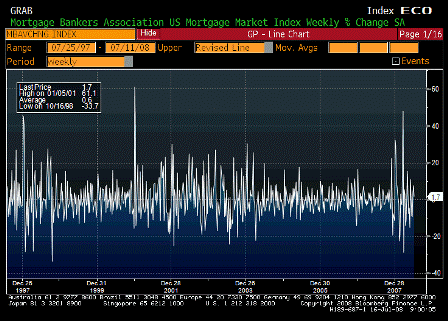


| Survey | n/a |
| Actual | 1.7% |
| Prior | 7.5% |
| Revised | n/a |

| Survey | n/a |
| Actual | 359.7 |
| Prior | 365.8 |
| Revised | n/a |
Minor down tic, still in a range that used to be indicative of 1.5 million housing starts per year, vs today’s approx 1 million.

| Survey | n/a |
| Actual | 1474.9 |
| Prior | 1379.3 |
| Revised | n/a |
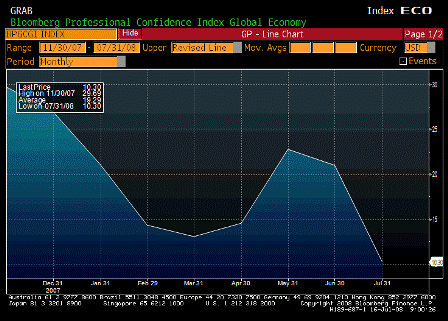
| Survey | n/a |
| Actual | 10.30 |
| Prior | 21.01 |
| Revised | n/a |
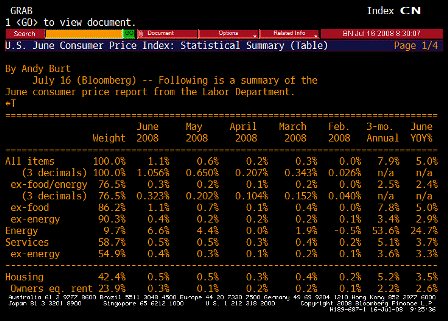
Inflation and falling equity markets are getting everyone down.
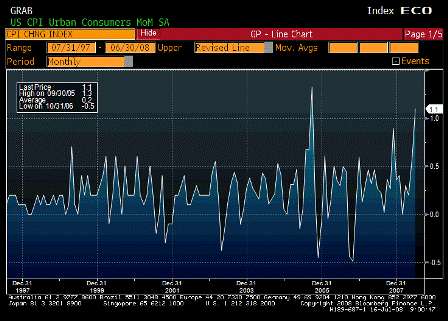
| Survey | 0.7% |
| Actual | 1.1% |
| Prior | 0.6% |
| Revised | n/a |
Higher than expected.
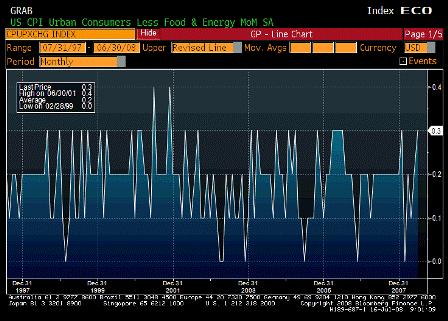
| Survey | 0.2% |
| Actual | 0.3% |
| Prior | 0.2% |
| Revised | n/a |
Headline leaking into core.
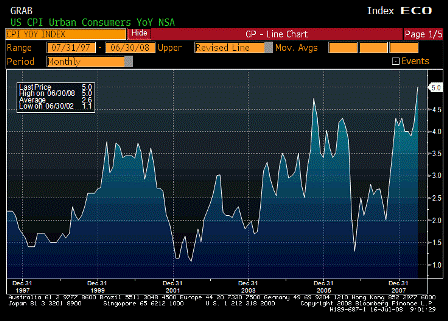
| Survey | 4.5% |
| Actual | 5.0% |
| Prior | 4.2% |
| Revised | n/a |
Breakout!
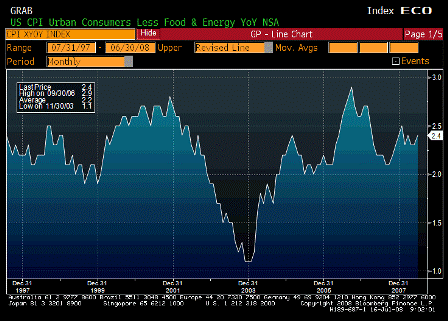
| Survey | 2.3% |
| Actual | 2.4% |
| Prior | 2.3% |
| Revised | n/a |
If it was a relative value story, this would be a lot lower and going down.
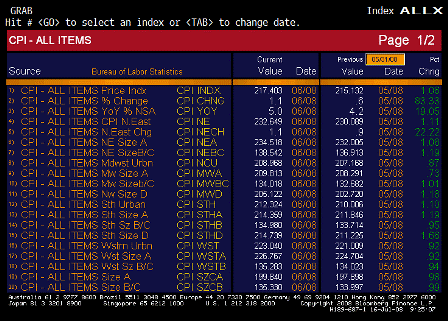
| Survey | n/a |
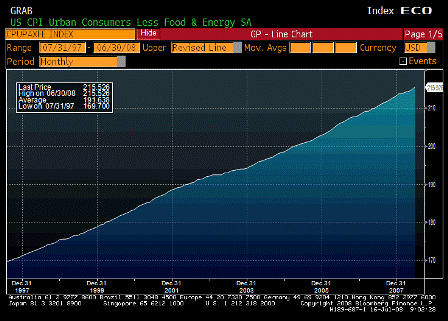
| Actual | 215.526 |
| Prior | 214.832 |
| Revised | n/a |
| Survey | 217.903 |
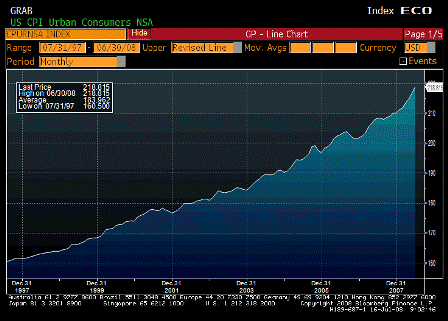
| Actual | 218.815 |
| Prior | 216.632 |
| Revised | n/a |
Karim writes:
Above Fed’s comfort zones.
In the 70’s I recall core passing 3% about the time headline passed 6%.
Click to see CPI Charts and CPI Table from the 1970s.
The difference there is no supply response for crude oil in sight this time.
Weak demand isn’t yet bringing CPI down as the Fed has been forecasting.
Weak occupancy hasn’t brought this measure down.
Maybe, but lower car sales may not bring prices down over time due to cost issues.
Costs rising here at well. And most employees probably get CPI increases.
Yes, and he and Vice Chair Kohn will have their hands full with the hawks at the August
Yes. Keeps this series lower than CPI until we’re down to eating bread and water, as deteriorating real terms of trade weigh on our standard of living.

| Survey | $70.0B |
| Actual | $67.0B |
| Prior | $115.1B |
| Revised | n/a |

| Survey | n/a |
| Actual | -$2.5B |
| Prior | $60.6B |
| Revised | $61.6B |
| Survey | 0.1% |
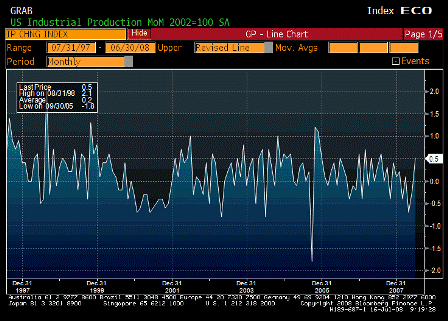
| Actual | 0.5% |
| Prior | -0.2% |
| Revised | n/a |
Better then expected.
| Survey | n/a |
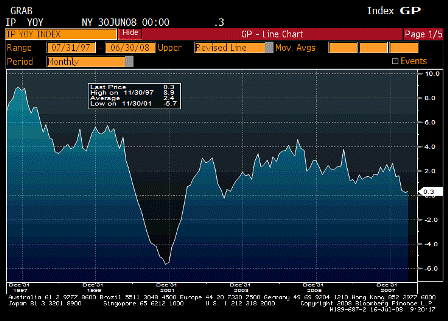
| Actual | 0.3% |
| Prior | 0.1% |
| Revised | 0.2% |
Seems to be working its way lower over time. May be stabilizing with the weak USD.
| Survey | 79.4% |
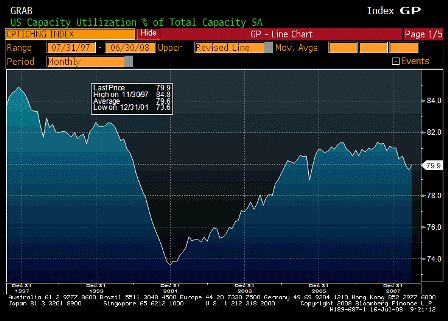
| Actual | 79.9% |
| Prior | 79.4% |
| Revised | 79.6% |
Higher than expected. The Fed is counting on slack to bring ‘inflation’ down.

| Survey | 18 |
| Actual | – |
| Prior | 18 |
| Revised | – |
[top]
The last few Michigan surveys had one-year inflation expectations over 5%.
This is not lost on an FOMC that believes inflation expectations cause inflation.
Chairman Bernanke said this yesterday after outlining the inflation expectations/inflation process:
“A critical responsibility of monetary policy makers is to prevent that process from taking hold.”
‘Prevent’ implies action, not ‘monitoring’.
Might just be a poor choice of words.
[top]
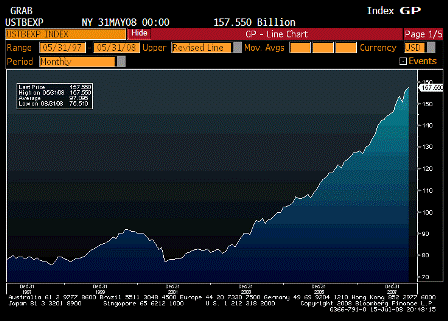
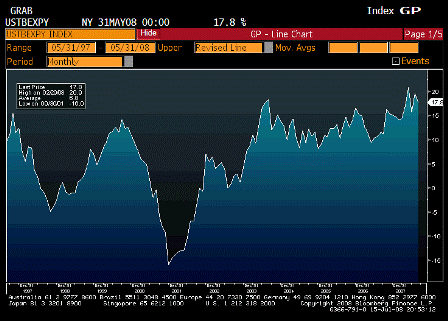
This is what happens when non residents are scrambling to reduce their hoards of USD financial assets.
Exports rising like this along with the still falling dollar indicates the current $60 billion monthly trade gap is still too high – non-residents simply don’t want to accumulate USD financial assets at that rate.
This adjustment process continually aligns the ‘real’ (price adjusted) trade gap to levels that equal foreign $US ‘savings desires’.
For the US this currently means a weak USD and a combo of rising exports and rising traded goods prices.
GDP muddles through as government spending and exports support demand, with continuing weak domestic demand and declining real terms of trade crushing the US standard of living.
[top]
Yet another economics professor gets it right!
September 02, 2007
Exports are Costs; Imports are Benefits
by Don Boudreaux
Today’s edition of the Chicago Tribune published this letter of mine:
You’re correct that free trade likely would create more opportunities for workers in Illinois to produce goods for export (“How free trade boosts Illinois,” Editorial, Aug. 25). Never forget, though, that the ultimate benefit of trade lies not in what people must sacrifice-not in the creation of opportunities to produce output for others-but in the greater quantity, quality and variety of goods and services that free trade makes possible for ordinary people to consume. Free trade’s bountiful harvest is not its exports; it is its imports.
Donald J. Boudreaux
Chairman, Department of Economics
George Mason University
Fairfax, Va.
[top]