2008-02-01 US Economic Releases

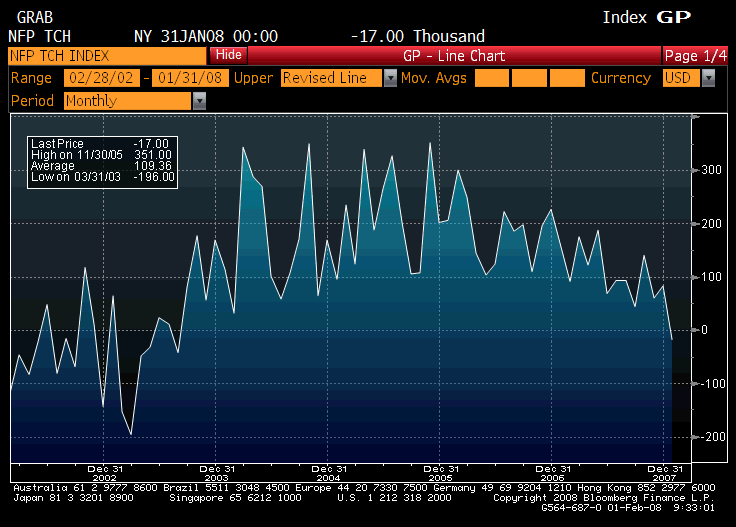
2007-02-01 Change in Nonfarm Payrolls

Change in Nonfarm Payrolls (Jan)

Survey 70K
Actual -17K
Prior 18K
Revised 82K

Last negative number was August – got revised up.

Apart from the unrevised January number, the revised previous numbers don’t look too bad.

(See following report.)


2008-02-01 Unemployment Rate

Unemployment Rate

Survey 5.0%
Actual 4.9%
Prior 5.0%
Revised n/a

Slight downtic.

The Fed calls 4.75% full employment.

So, this is close enough.

2008-02-01 Change in Manufacturing Payrolls

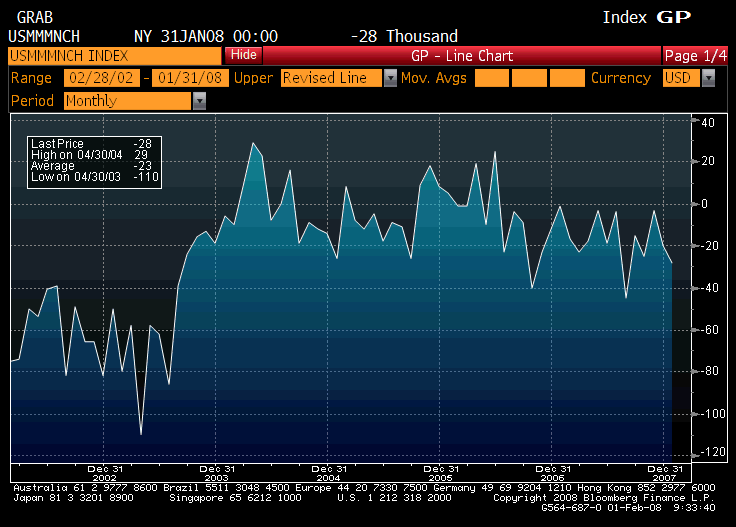
Change in Manufacturing Payrolls (Jan)

Survey -20K
Actual -28K
Prior -31K
Revised -20K

Suspiciously low as a per December durable goods and export numbers.

2008-02-01 Average Hourly Earnings MoM

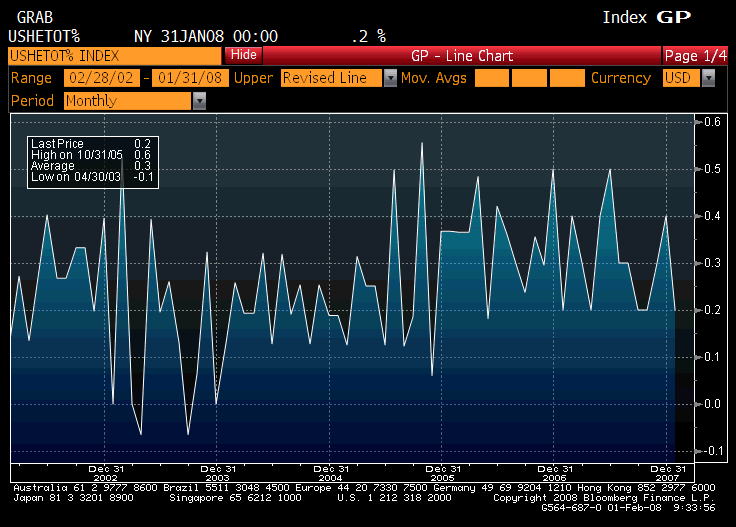
Average Hourly Earnings MoM (Jan)

Survey 0.3%
Actual 0.2%
Prior 0.4%
Revised n/a

2008-02-01 Average Hourly Earnings YoY

Average Hourly Earnings YoY (Jan)

Survey 3.9%
Actual 3.7%
Prior 3.7%
Revised n/a

Seems to be under control though a weak productivity number could raise unit labor costs.


2008-02-01 Average Weekly Hours

Average Weekly Hours

Survey 33.8
Actual 33.7
Prior 33.8
Revised n/a

Down a bit. Fairly steady.


2008-02-01 RPX Composite 28dy YoY

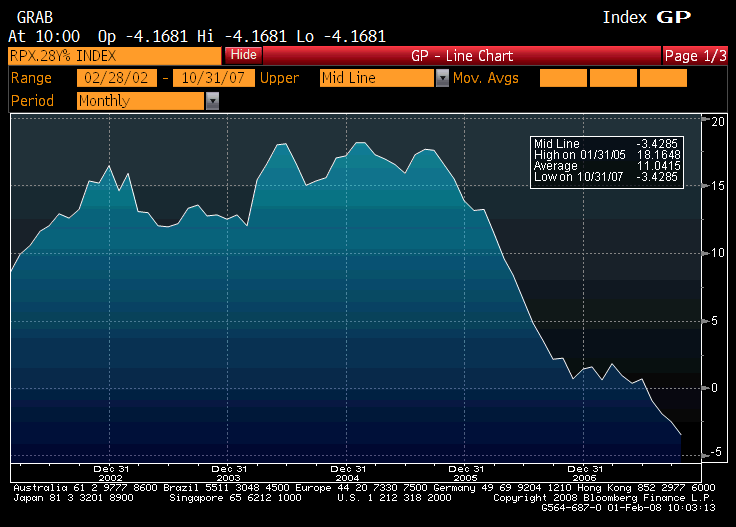
RPX Composite 28dy YoY (Nov)

Survey n/a
Actual -4.1681
Prior -3.4285
Revised n/a

small-2008-02-01-rpx-composite-28dy-index.gif

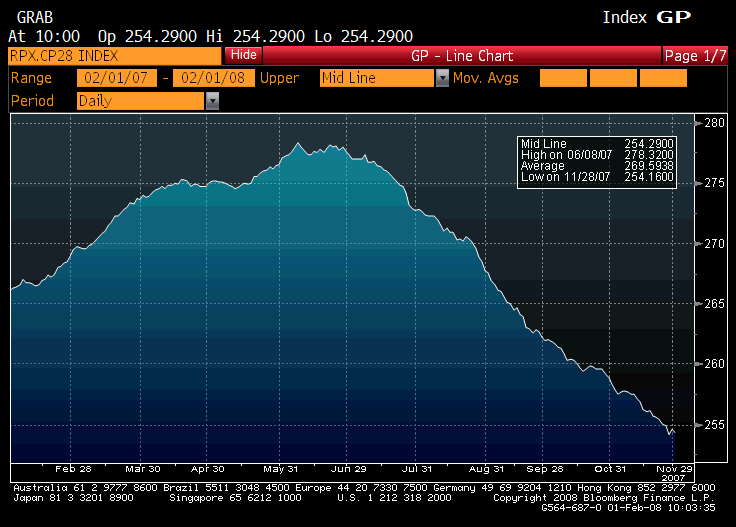
RPX Composite 28dy Index (Nov)

Survey n/a
Actual 254.3
Prior 255.5
Revised 258.9

November housing was weak.


2008-02-01 U. of Michigan Confidence

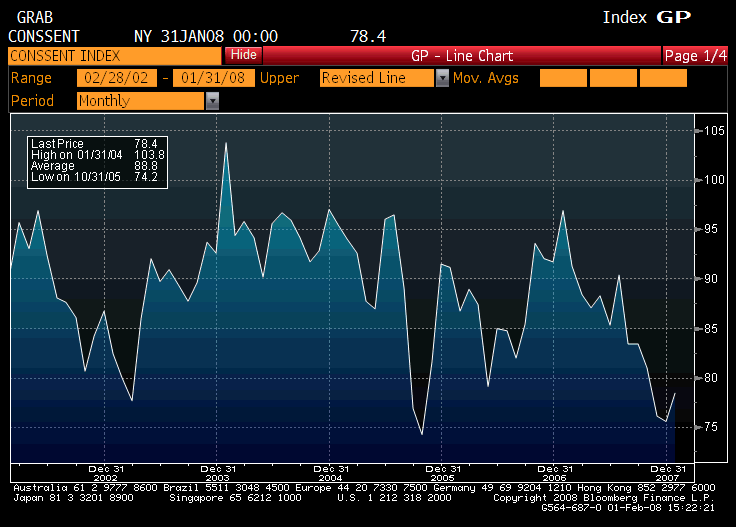
U. of Michigan Confidence (Jan F)

Survey 79.0
Actual 78.4
Prior 80.5
Revised n/a

Not bad.

2008-02-01 U. of Michigan TABLE

Both current and expected improved.

U. of Michigan TABLE

2008-02-01 ISM Manufacturing

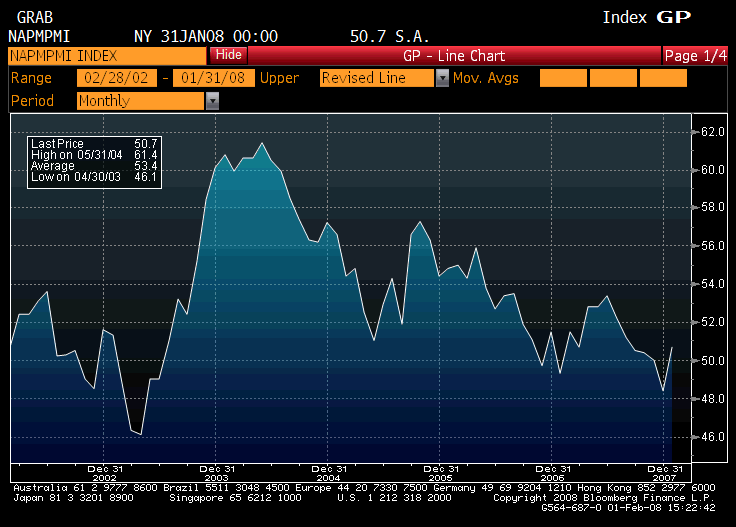
ISM Manufacturing (Jan)

Survey 47.3
Actual 50.7
Prior 47.7
Revised 48.4

Back to growth mode.


2008-02-01 ISM Prices Paid

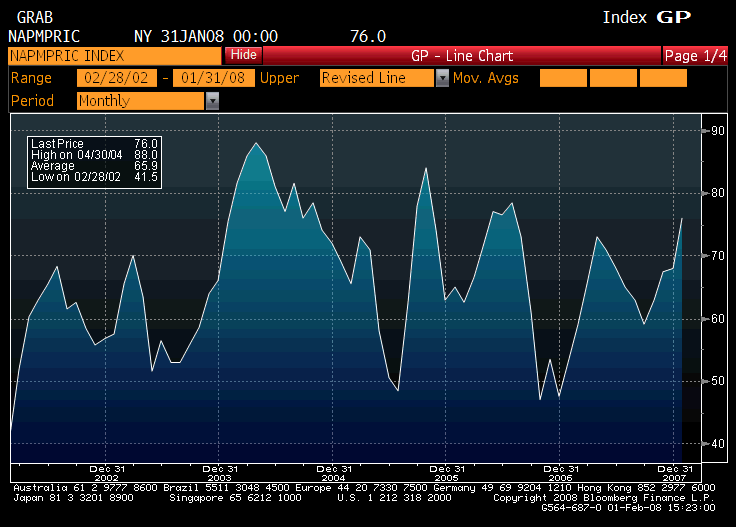
ISM Prices Paid (Jan)

Survey 68.0
Actual 76.0
Prior 68.0
Revised n/a

Inflation ripping here.


2008-02-01 Construction Spending

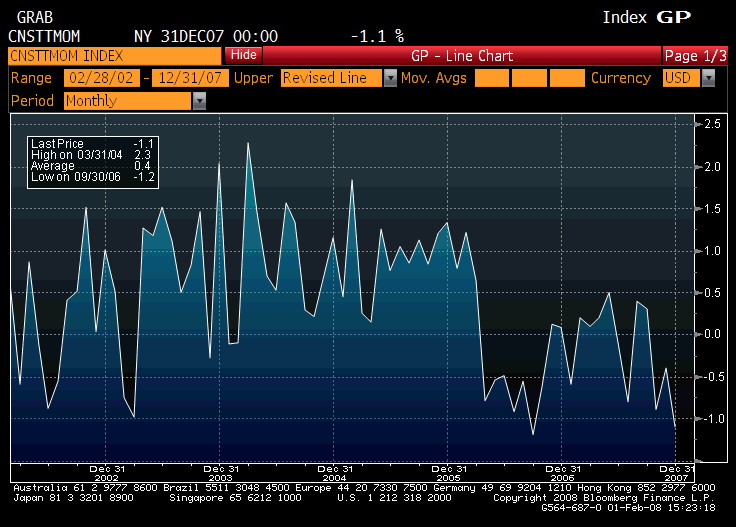
Construction Spending MoM (Dec)

Survey -0.5%
Actual -1.1%
Prior 0.1%
Revised -0.4%

Still bumping along the bottom.

3 most important numbers

From Karim:

  1. Index of aggregate hours -0.3%
  1. Diffusion index from 50.0 to 46.2
  1. Median duration of unemployment from 8.4 to 8.8 weeks

So output likely declining, more industries shedding jobs than adding, and l-t unemployed accounting for larger % of total unemployed

Other notes..

  • Unemployment rate falls from 4.97% to 4.925%.

Partially reversing last month’s rise.

  • Temp jobs fall by 9k (good coincident indicator)
  • Average hourly earnings up only 0.2%
  • Net revisions to 2007 -376k
  • NFP decline of 17k first decline since 8/03

This is not the first reported drop in payrolls, as August originally reported down 4,000. It was eventually revised up to 92,000 and then further revised up to 74,000 with benchmark revisions.

December was revised up to 82,000 from 18,000.

November down from 115,000 to 60,000.

This rearranges the sequence with November now possible the bottom, should January get revised up higher than 82,000.

  • Rare decline posted in business services (-11k)
  • Mfg (-28k) surprising in light of weak $
  • Construction sheds another 27k
  • Govt loses a surprising 18k jobs

Yes, these look like the kind of numbers likely to result in the kinds of revisions we’ve been seeing continuously for at least six months.

And the revisions to payroll numbers have put them more in line with the ADP numbers.

ADP was up 130,000 for January.

December durable goods was a blowout number.

Inventories were down substantially in Q4.

While the initial reported payroll numbers have all been substantially revised, markets have continued to respond to the initial reports and not to the revisions.


♥

Microsoft/yahoo

Expect a lot more takeover activity supporting equities.

Forces are stacked against ‘normal’ shareholding, as management is incented to dilute shareholders as previously discussed, and as repeatedly demonstrated during the last 6 months via dilutive converts, etc.

By taking over the entire company, that risk goes away.

This means that since public companies trade cheap enough for shareholders to own, that price will be cheap enough to make takeovers attractive.

Expect this bit of institutional structure to result in a new, massive, round of takeovers/consolidation.


♥